
Wikimedia Commons
Pointillism
Pointillism
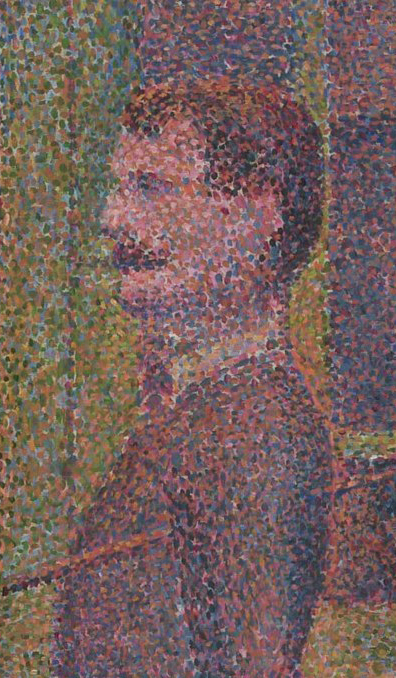
Imagine making a painting using only tiny dots. That is what Pointillism is all about. Instead of mixing paint on a palette, artists placed small dots of pure color side by side. When you stand back and look, your eyes blend the dots together. The picture seems to glow with light. This clever style was invented in the 1880s in France.
How Pointillism Works
Pointillist artists used science to help them paint. They learned that tiny dots of different colors placed close together look like a new color from far away. Blue dots next to yellow dots can look green. Red dots next to blue dots can look purple. This is because your brain mixes the colors for you. It takes a very long time to fill a whole painting with tiny dots.
Georges Seurat
Georges Seurat invented Pointillism. His most famous painting is called A Sunday Afternoon on the Island of La Grande Jatte. It shows people relaxing in a park by a river. The painting is huge, about 7 feet tall and 10 feet wide. It is made entirely of tiny dots. It took Seurat about two years to finish. His friend Paul Signac also painted in this style.
Fun Facts
- Georges Seurat's most famous painting has millions of tiny hand-painted dots in it.
- Pointillism was based on science about how our eyes see and mix colors.
- The painting A Sunday Afternoon on the Island of La Grande Jatte is so big that it fills an entire wall at the Art Institute of Chicago.
Did You Know?
Georges Seurat spent two whole years placing tiny colored dots to finish his most famous painting!

You finished the article! Great job!