
Wikimedia Commons
Seed Banks
Seed Banks
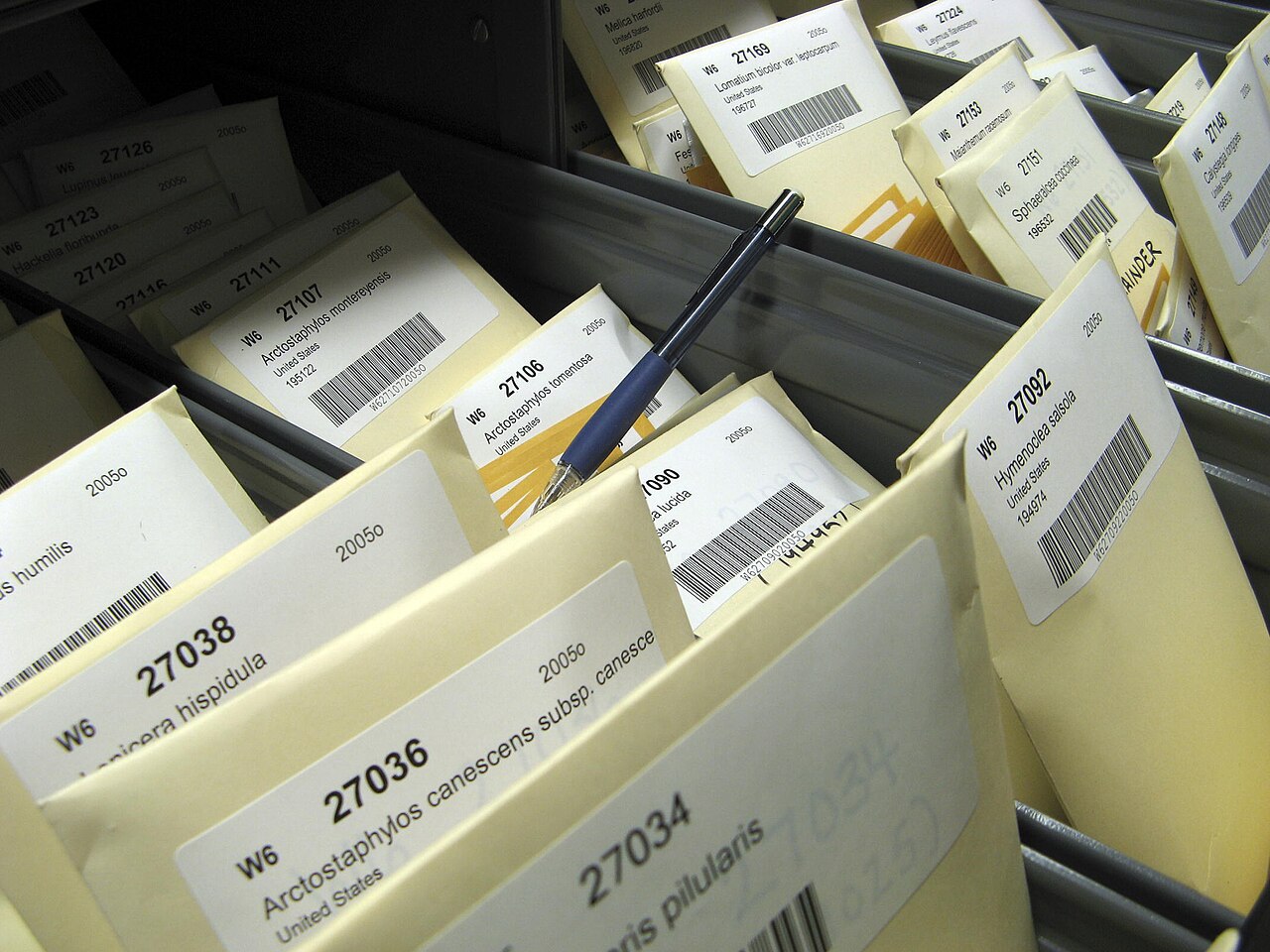
A seed bank is like a library, but it stores seeds instead of books. Scientists save seeds from thousands of different plants. The seeds are kept safe so they can be used later if a plant ever goes missing. Seed banks help protect nature for the future.
How Seeds Are Stored
Seeds are cleaned and dried before they go into storage. Then they are placed in sealed bags or jars. Seed banks keep the seeds very cold, sometimes below freezing. This helps them stay alive for many years. When it is time, the seeds can be taken out and planted to grow new plants.
Why They Matter
Plants sometimes disappear because of fires, floods, or people cutting down forests. Seed banks make sure we do not lose important plants forever. Farmers can use saved seeds to grow old types of food crops again. Scientists also study the seeds to learn about plant history. Seed banks are like a safety net for all the plants on Earth.
Fun Facts
- The Svalbard Global Seed Vault in Norway holds over one million seed samples.
- Some seeds can stay alive in a seed bank for hundreds of years.
- Seed banks exist in more than 100 countries.
Did You Know?
The Svalbard Seed Vault is built deep inside a snowy mountain so the seeds stay cold and safe even if the power goes out.

You finished the article! Great job!