
Wikimedia Commons
Antarctic Ice Core Research
Antarctic Ice Core Research
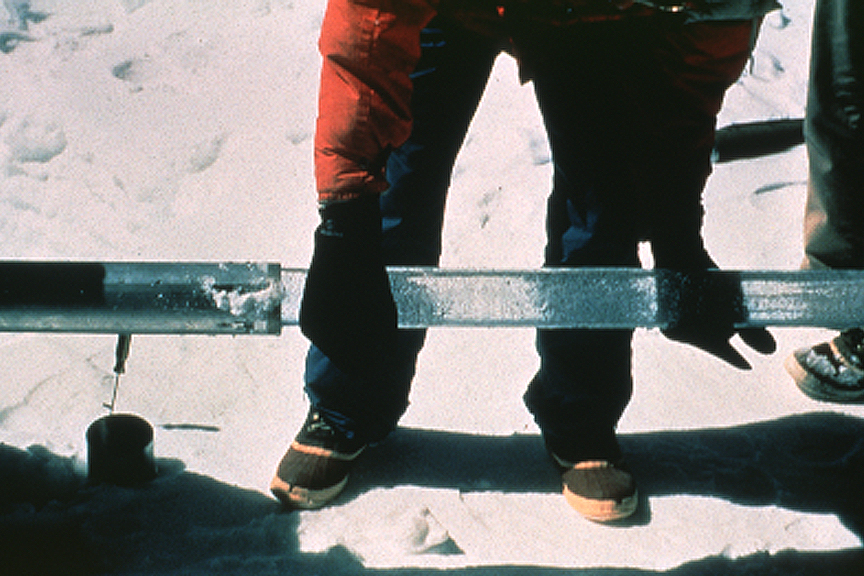
In Antarctica, snow has been piling up for millions of years. Each layer of snow turns into ice and traps tiny bubbles of air inside. Scientists drill deep into the ice to pull out long tubes called ice cores. These cores are like a history book that tells us about Earth's climate long ago.
How Ice Cores Work
Scientists use special drills to cut into the ice sheet. They pull out long cylinders of ice, sometimes more than 2 miles deep. Each layer of ice represents a different year. The deeper the ice, the older it is. By studying the air bubbles trapped inside, scientists can learn what the air was like thousands of years ago.
What Ice Cores Tell Us
Ice cores have shown that Earth's climate has changed many times. They reveal periods of warming and cooling over hundreds of thousands of years. Ice cores also show how much carbon dioxide was in the air long ago. This helps scientists understand how human activity is changing the climate today.
Fun Facts
- The oldest ice core ever drilled is about 800,000 years old.
- Ice cores can contain volcanic ash from eruptions that happened thousands of years ago.
- Some ice core drilling sites in Antarctica are at an altitude of over 10,000 feet.
Did You Know?
Tiny air bubbles trapped in ice cores let scientists breathe the same air that existed on Earth hundreds of thousands of years ago.

You finished the article! Great job!