Wikimedia Commons
The Digestive System
The Digestive System
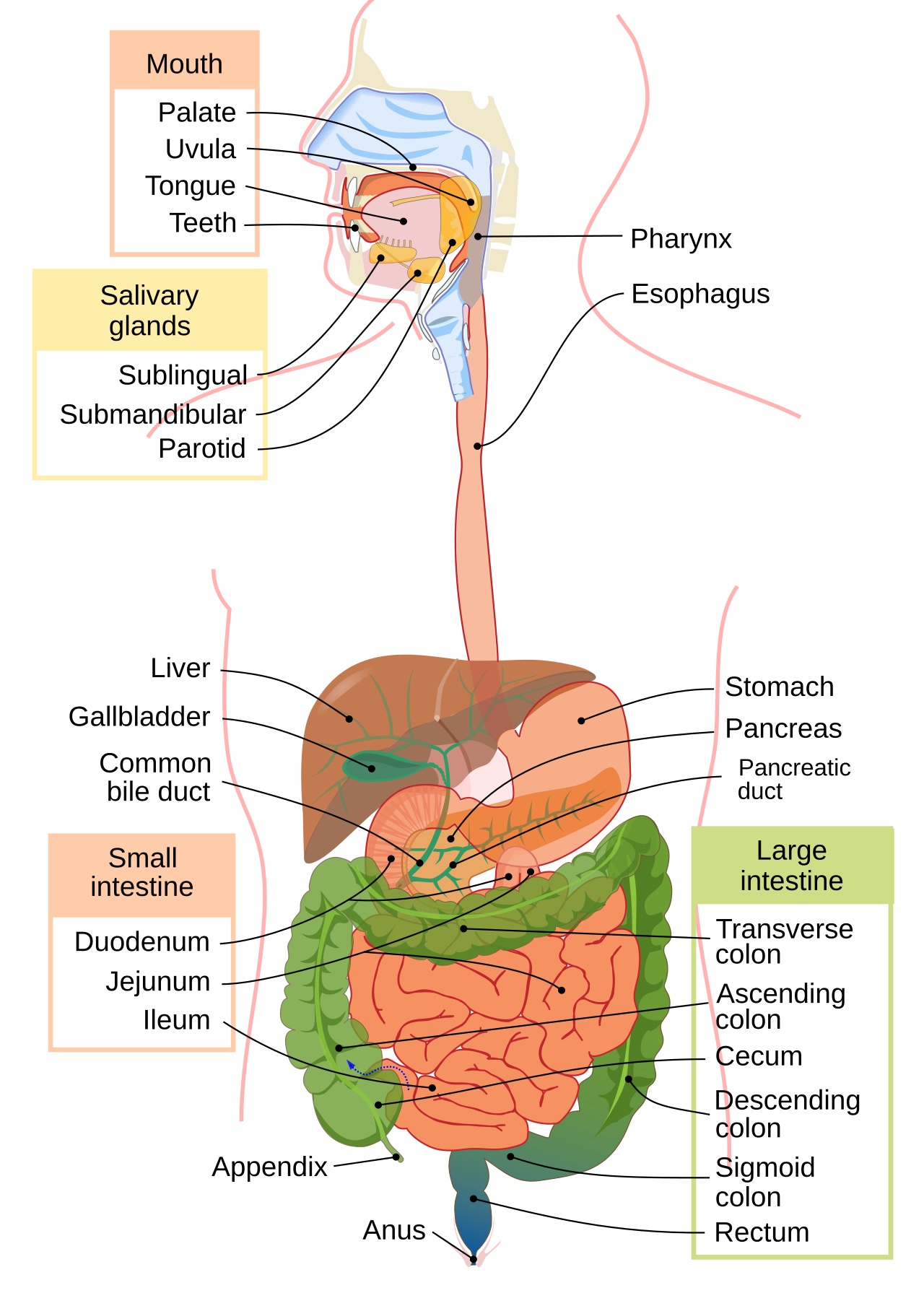
The digestive system is a group of body parts that work together to break down food. It starts at your mouth and ends at the other end of your body. Along the way, food turns into tiny pieces your body can use. Your body takes the good parts for fuel and gets rid of the rest.
How It Works
When you chew food, your spit mixes with it to start breaking it down. The food then slides down a tube called the esophagus into your stomach. Your stomach mashes the food with special juices. Then it moves into the intestines, where nutrients are soaked up.
Main Parts
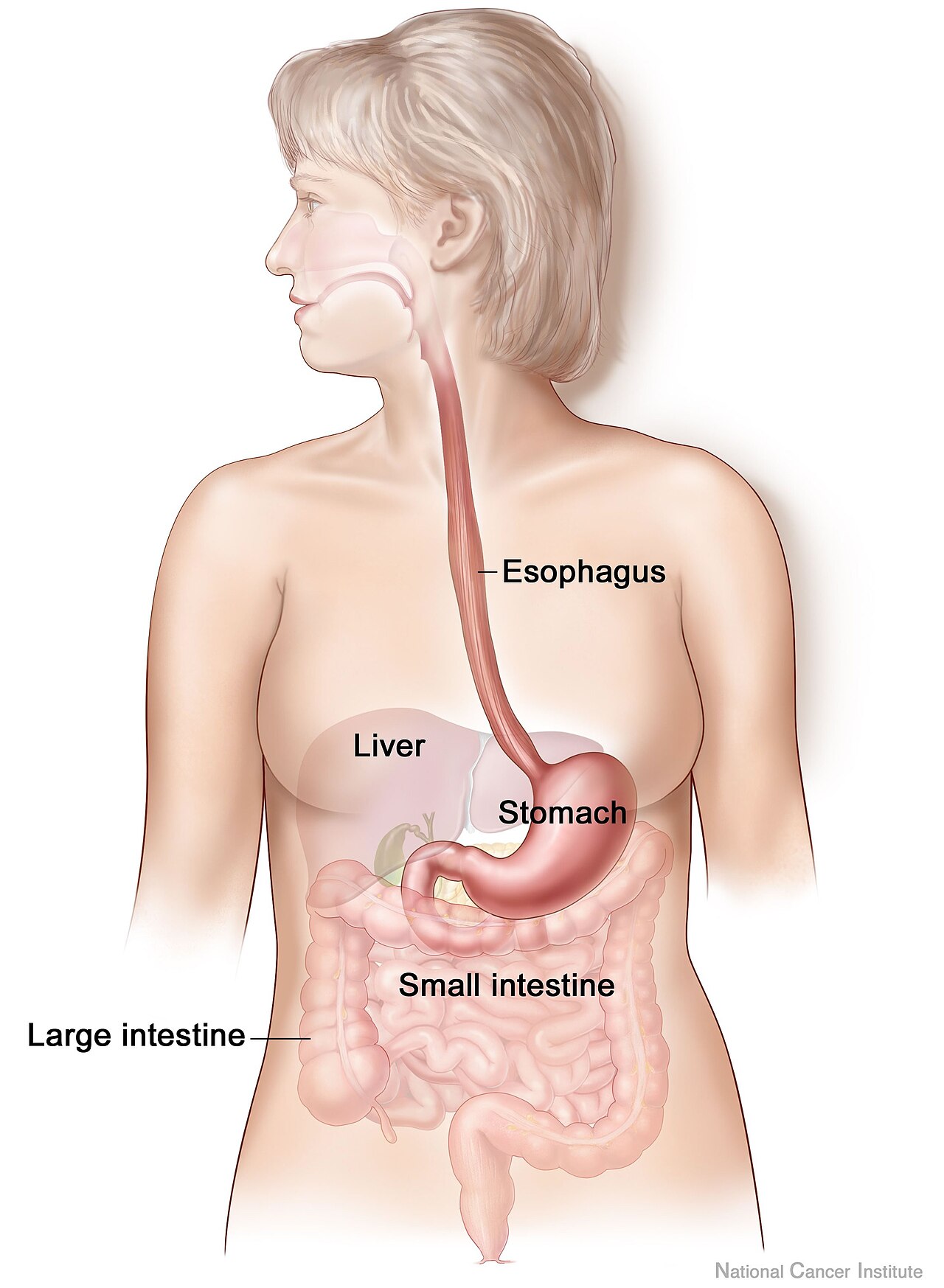
The main parts are the mouth, esophagus, stomach, and intestines. The liver and pancreas also help by making juices that break down food. The small intestine is long and curly. The large intestine pulls out water and makes waste ready to leave the body.
Fun Facts
- Your small intestine is about 20 feet long if you stretch it out.
- It takes food around 24 hours to travel through your whole body.
- Your stomach makes a new lining every few days so it does not digest itself.
Did You Know?
Your stomach acid is so strong it could dissolve metal. A thick layer of mucus keeps it from hurting you.

You finished the article! Great job!