Wikimedia Commons
The Respiratory System
The Respiratory System
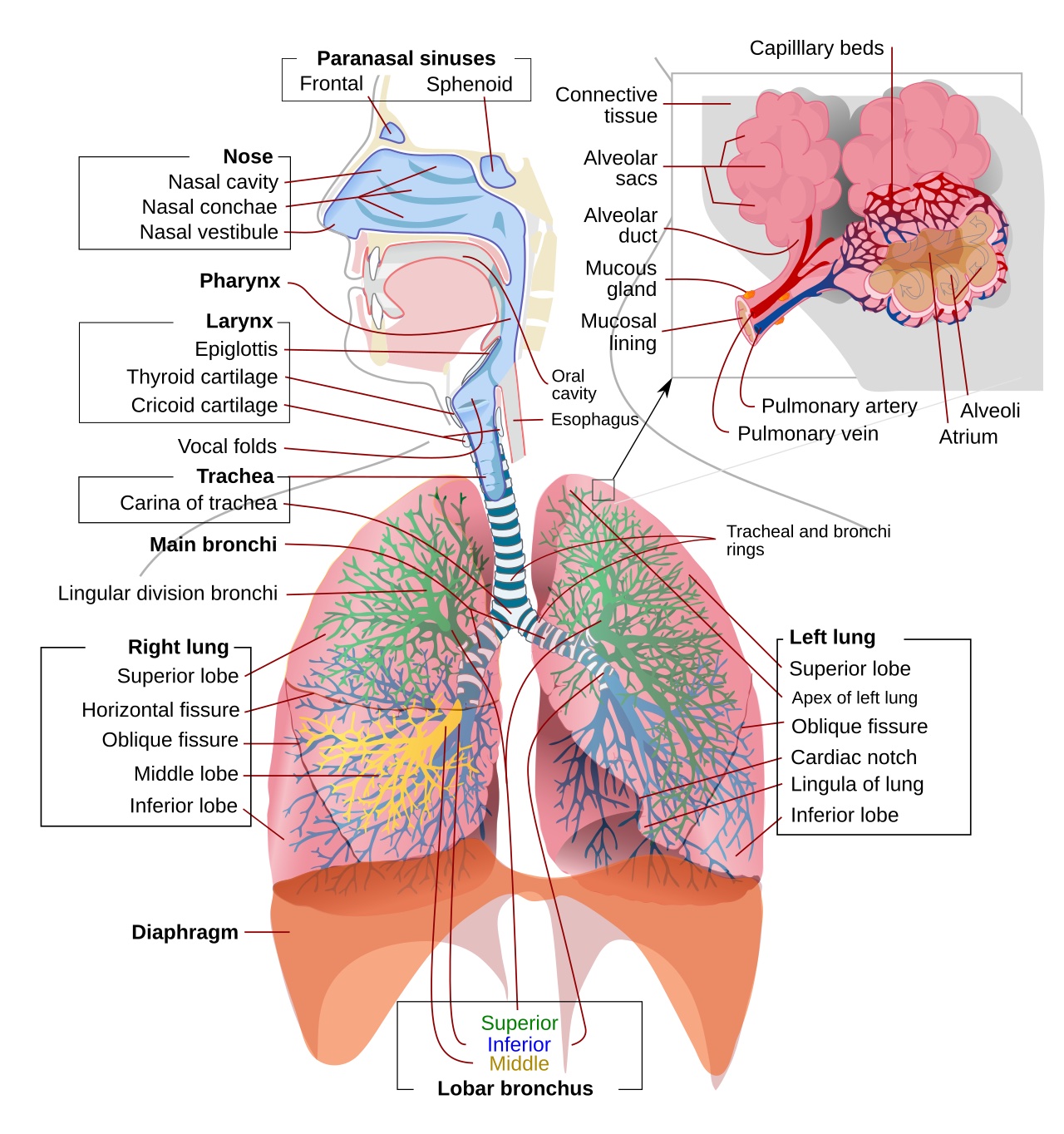
The respiratory system lets you breathe. It takes in oxygen from the air and pushes out a gas called carbon dioxide. Your lungs are the main part of this system. You breathe without even thinking about it.
How You Breathe
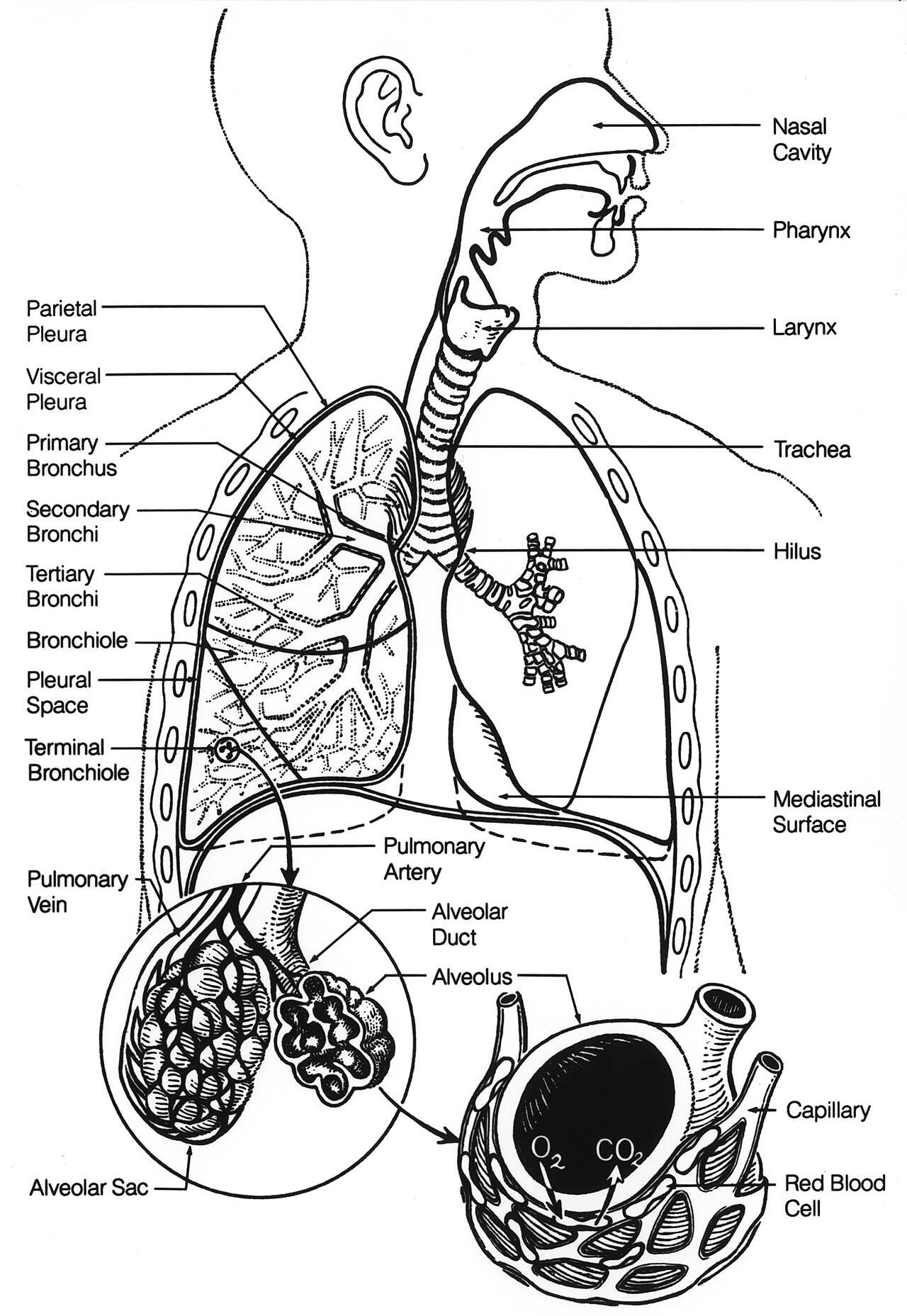
When you breathe in, air goes through your nose or mouth. It travels down a tube called the windpipe. Then it fills up your two lungs like balloons. A muscle under your lungs called the diaphragm helps pull the air in.
Why We Need Oxygen
Every cell in your body needs oxygen to work. Your lungs send oxygen into your blood. Your blood then carries it all over your body. When you breathe out, you get rid of waste gas your body does not need.
Fun Facts
- You breathe about 20,000 times every day.
- Your right lung is a little bigger than your left lung.
- A sneeze can shoot air out of your nose at 100 miles per hour.
Did You Know?
If you could spread your lungs out flat, they would be as big as a tennis court. This helps them grab lots of oxygen.

You finished the article! Great job!