
Wikimedia Commons
The Hanseatic League
The Hanseatic League
The Hanseatic League was a powerful group of merchant cities long ago. It began in the 1100s in northern Europe. The cities worked together to trade goods safely. They shared ships, sailors, and trading posts. The league lasted for hundreds of years.
Cities Working Together
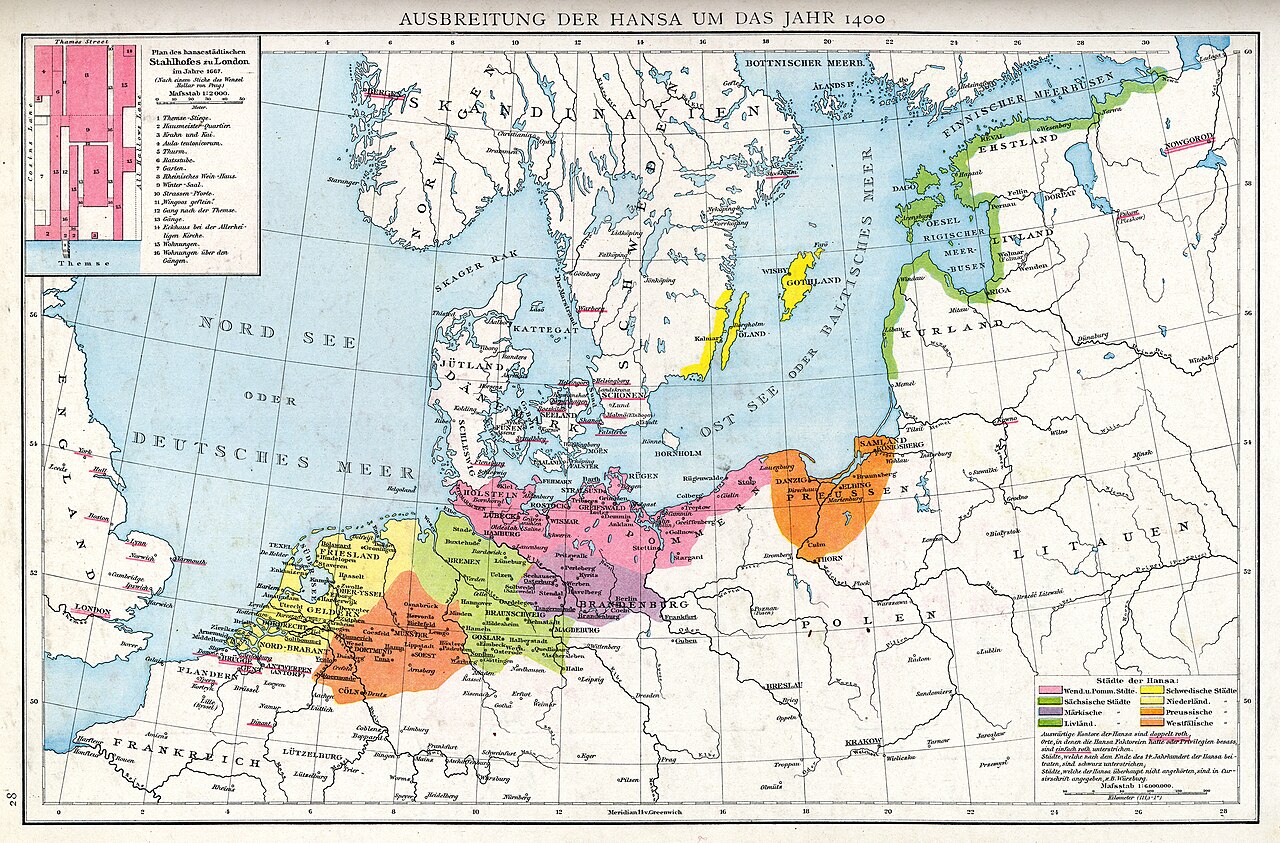
The league had more than 100 member cities at its biggest. Cities like Lubeck, Hamburg, and Bremen in Germany were leaders. Traders moved goods across the North Sea and the Baltic Sea. They sold fish, furs, timber, wool, and grain. The cities helped each other fight off pirates and unfair rulers.
How It Ended
The Hanseatic League was strongest in the 1300s and 1400s. Over time, countries grew bigger and stronger than the trading cities. New sea routes to Asia and America changed world trade. Member cities began to leave the league. By the mid-1600s, the Hanseatic League faded away.
Fun Facts
- The word 'Hansa' is an old German word for 'group' or 'guild'.
- The league had its own special ships called 'cogs'.
- Some cities in Germany still proudly call themselves 'Hanseatic cities' today.
Did You Know?
Hanseatic merchants traveled as far as London and Russia to buy and sell goods.

You finished the article! Great job!