
Wikimedia Commons
The Triangular Trade
The Triangular Trade
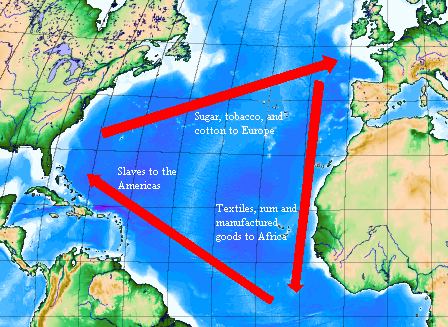
From the 1500s to the 1800s, a trading system connected Europe, Africa, and the Americas. It was called the Triangular Trade because the routes formed a triangle across the Atlantic Ocean. Ships carried goods from Europe to Africa, enslaved people from Africa to the Americas, and crops from the Americas back to Europe. This system brought wealth to some but caused terrible suffering for millions of African people.
How the Trade Worked
European ships sailed to Africa carrying goods like cloth, guns, and metal. These goods were traded for captured African people. The enslaved people were forced onto crowded ships and taken across the ocean. This awful journey was called the Middle Passage. Many people did not survive it. In the Americas, the enslaved people were forced to work on plantations growing sugar, tobacco, and cotton.
The Impact on the World
The Triangular Trade made European countries and some merchants very rich. But it caused enormous pain to millions of African people and their families. Entire communities in Africa were torn apart. Over time, many brave people fought to end the slave trade. By the mid-1800s, most countries had banned it. The effects of the Triangular Trade can still be felt around the world today.
Fun Facts
- The journey across the Atlantic, called the Middle Passage, took about six to eight weeks.
- Sugar was one of the most valuable products shipped during the Triangular Trade.
- Over 12 million African people were taken from their homes and forced into slavery.
Did You Know?
Olaudah Equiano was an enslaved man who bought his own freedom and wrote a book about his experiences. His story helped people understand the horrors of slavery and fight to end it.

You finished the article! Great job!