
Wikimedia Commons
Kwanzaa
Kwanzaa
Kwanzaa is a holiday that lasts seven days. It starts on December 26 and ends on January 1. The holiday honors African heritage and culture. Families light candles and share meals together. Kwanzaa was started in 1966 by a teacher named Maulana Karenga.
The Seven Principles
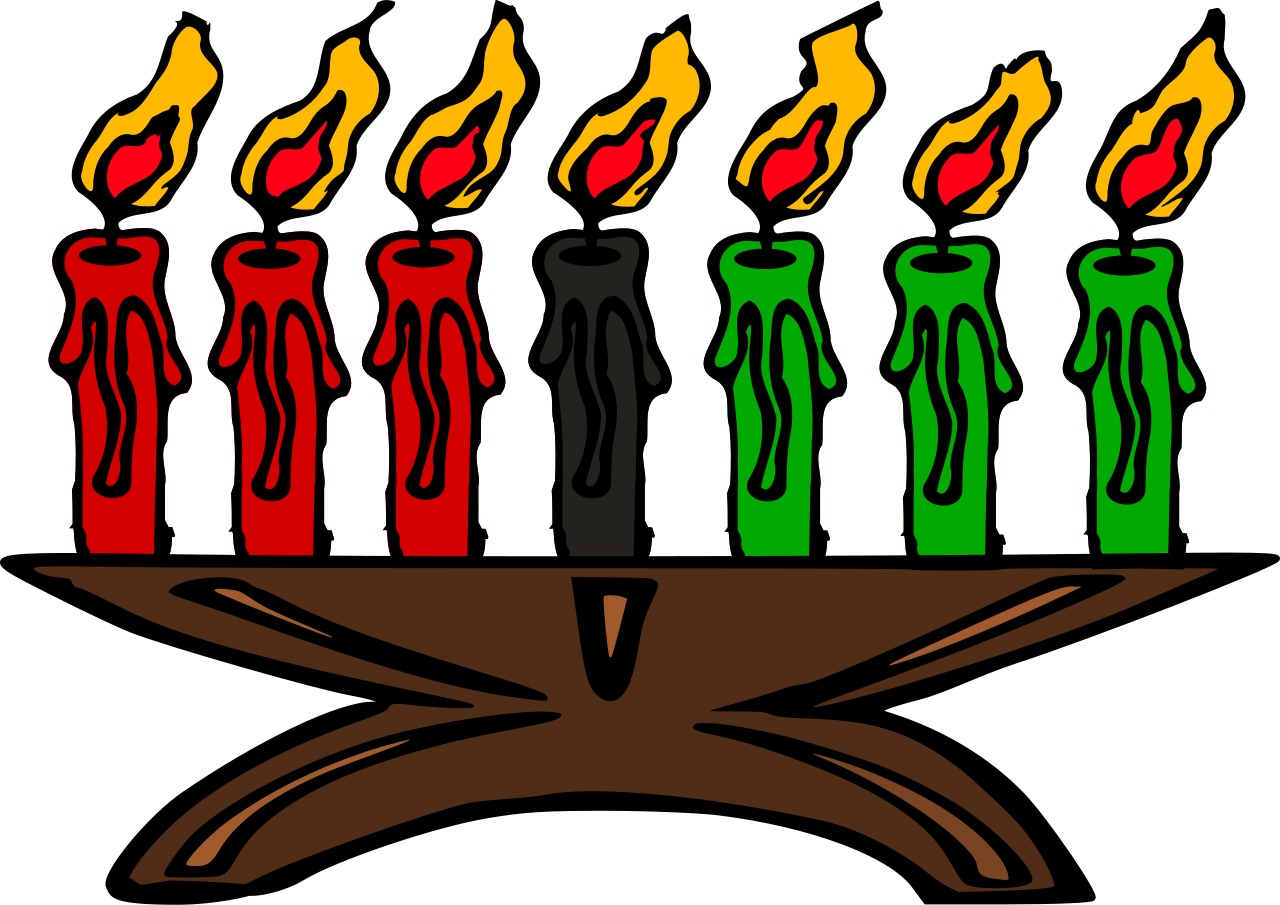
Each day of Kwanzaa stands for one of seven special ideas. These ideas are called the Nguzo Saba. They include unity, self-respect, and working together. Families talk about each idea as they light a candle. The candles sit in a holder called a kinara.
Traditions and Symbols
People decorate their homes with African art and bright cloth. The colors of Kwanzaa are black, red, and green. Families eat a big feast called Karamu on the sixth night. They play drums, sing songs, and dance. Children often receive small gifts, especially books about African culture.
Fun Facts
- The word Kwanzaa comes from a phrase in Swahili that means first fruits.
- Seven candles are lit during Kwanzaa, one new one each day.
- Kwanzaa is celebrated by millions of people around the world.
Did You Know?
Kwanzaa is not a religious holiday. It can be celebrated alongside other winter holidays like Christmas or Hanukkah.

You finished the article! Great job!