
Wikimedia Commons
The CT Scanner
The CT Scanner
A CT scanner is a special machine that takes very detailed pictures of the inside of your body. CT stands for Computed Tomography. It uses X-rays and a computer to make clear images that help doctors see more than a regular X-ray can.
How the CT Scanner Was Invented
The CT scanner was invented in the 1970s by two scientists named Godfrey Hounsfield and Allan Cormack. They figured out how to use computers to combine many X-ray pictures into one detailed image.
Both scientists won the Nobel Prize for their invention. The CT scanner was one of the biggest breakthroughs in medicine. It lets doctors see inside the body without doing surgery.
How CT Scans Work
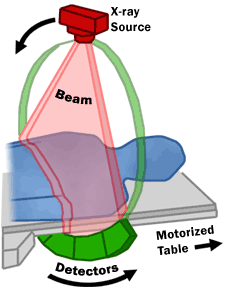
During a CT scan, you lie on a table that slides into a large, round machine. The machine spins around you, taking hundreds of X-ray pictures from different angles. A computer puts all the pictures together to create a detailed view.
CT scans can show organs, blood vessels, and bones in great detail. Doctors use them to find illnesses, check for injuries, and plan surgeries. A CT scan usually takes just a few minutes.
Fun Facts
- A CT scan takes hundreds of X-ray pictures in just a few seconds.
- The first CT scanner took hours to create one image. Now it takes seconds.
- CT scanners are also used to study ancient mummies without unwrapping them.
Did You Know?
One of the inventors of the CT scanner, Godfrey Hounsfield, also helped develop the first all-transistor computer in Britain.

You finished the article! Great job!