
Wikimedia Commons
Rounding
Rounding
Rounding makes numbers easier to use. Instead of saying 48, you might round it to 50. Rounded numbers are not exact, but they are close. They help you do math faster in your head. Rounding is a big part of everyday math.
Rules of Rounding
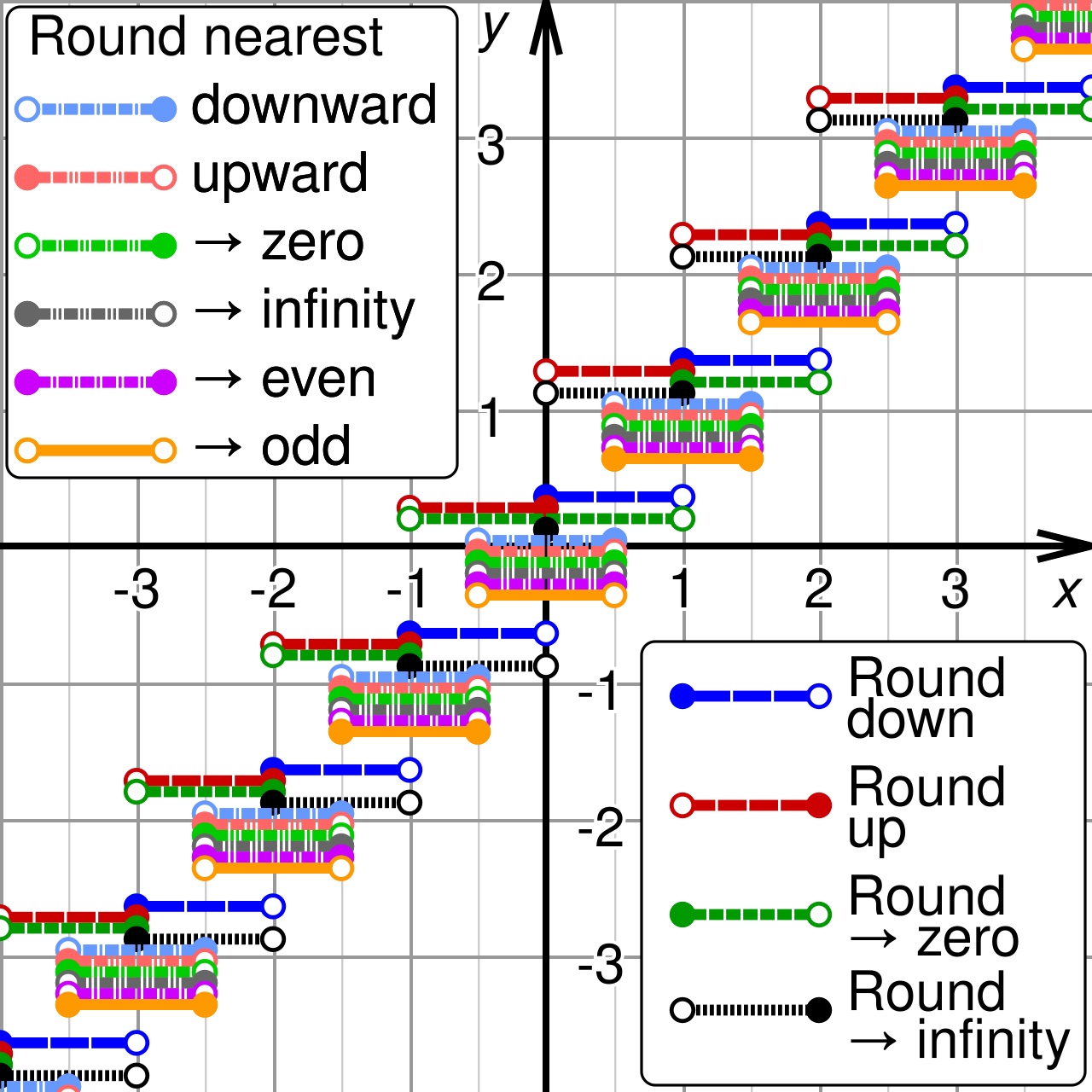
When you round, you look at the next digit to the right. If that digit is 5 or more, you round up. If it is less than 5, you round down. For example, 43 rounds down to 40, but 47 rounds up to 50. The rules work for tens, hundreds, and even bigger numbers.
Rounding in Real Life
People round numbers all the time. Prices at stores are often rounded to make them look nicer. News reports round big numbers so they are easier to say. Teachers may round grades up to the next whole number. Even clocks show rounded times. Rounding helps us share numbers quickly.
Fun Facts
- The number 5 is the halfway point and always rounds up.
- Some countries round prices to the nearest 5 cents.
- Rounding is also called approximation.
Did You Know?
Money counts are often rounded to the nearest dollar on tax forms to make math simpler.

You finished the article! Great job!