
Wikimedia Commons
Grasslands
Grasslands
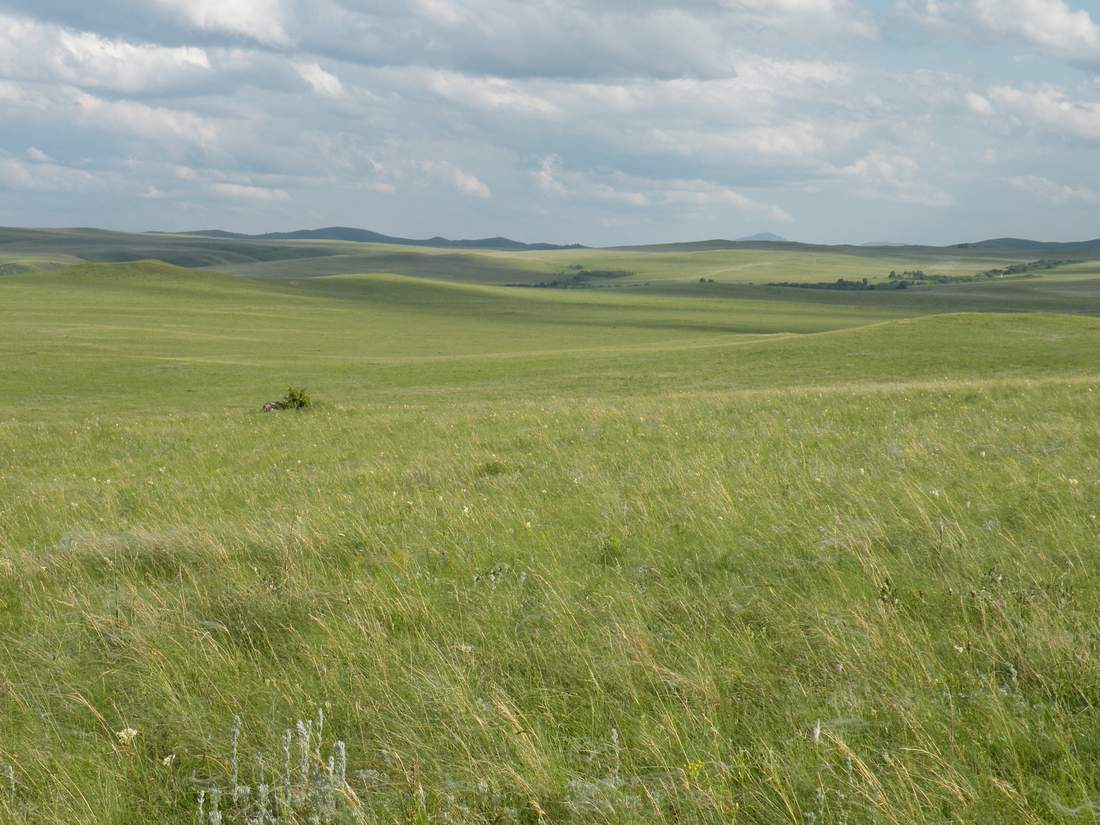
Grasslands are large areas of land covered mainly by grasses. They get more rain than deserts but not enough for forests to grow. Grasslands are found on every continent except Antarctica. They go by different names: prairies in North America, savannas in Africa, and steppes in Asia.
Sea of Grass
Grasslands might look empty, but they are full of life. The soil beneath grasslands is some of the richest on Earth. Grass roots grow deep and hold the soil together. Grasslands help clean the air and store carbon. Many of the world's crops are grown on former grasslands.
Grassland Animals
African savannas are home to lions, elephants, zebras, and giraffes. North American prairies have bison, prairie dogs, and hawks. Grassland animals are often fast runners because there are few places to hide from predators on the flat, open landscape.
Fun Facts
- Grasslands cover about 25 percent of Earth's land.
- Prairie dog towns can have thousands of residents.
- Grass can survive fire and drought because it grows from the roots.
Did You Know?
The North American prairie once had 30 to 60 million bison roaming across it. By the 1890s, fewer than 1,000 were left. Conservation efforts have helped bring the population back to about 500,000 today.

You finished the article! Great job!