
Wikimedia Commons
Hot Springs
Hot Springs
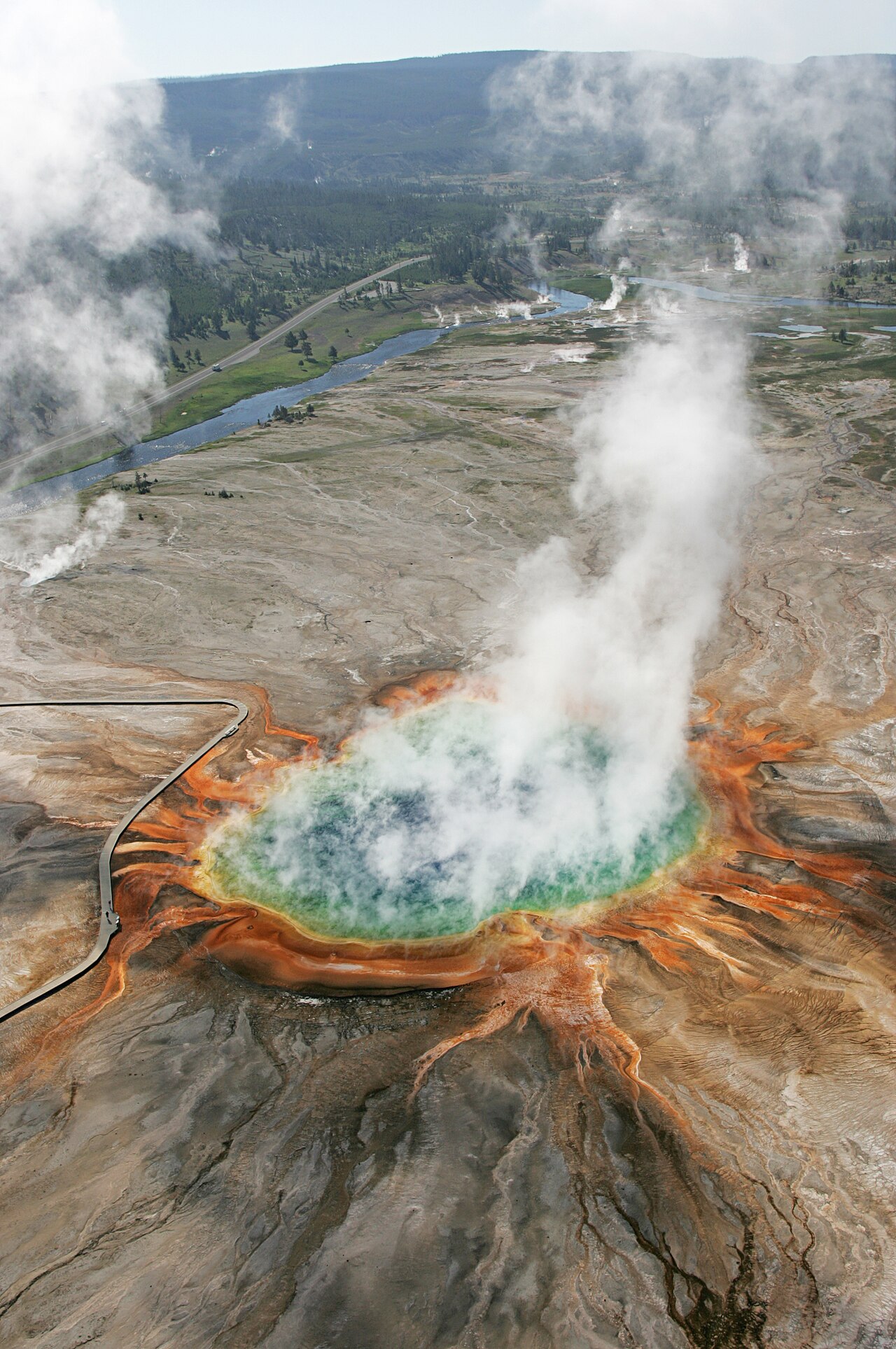
Hot springs are natural pools of water that are heated by the Earth's internal heat. They can be found all over the world, from Iceland to Japan to Yellowstone National Park. The water in hot springs can range from warm to boiling hot.
How They Work
Deep underground, water seeps through cracks in the earth's crust. It gets heated by hot rocks and magma. The heated water then rises back to the surface as a hot spring. The water often contains dissolved minerals that give it unusual colors and health properties.
Living in Hot Water
Some bacteria and other tiny organisms thrive in the extremely hot water of hot springs. These extremophiles can survive in temperatures that would kill most living things. The colorful rings around hot springs in Yellowstone are created by different types of bacteria.
Fun Facts
- Grand Prismatic Spring in Yellowstone is larger than a football field.
- Some hot springs can reach temperatures of 250 degrees Fahrenheit.
- Japanese snow monkeys bathe in hot springs to keep warm.
Did You Know?
The bacteria that live in hot springs have been incredibly useful to science. An enzyme from a hot spring bacterium called Taq polymerase made modern DNA testing possible!

You finished the article! Great job!