
Wikimedia Commons
Aurora Borealis
Aurora Borealis
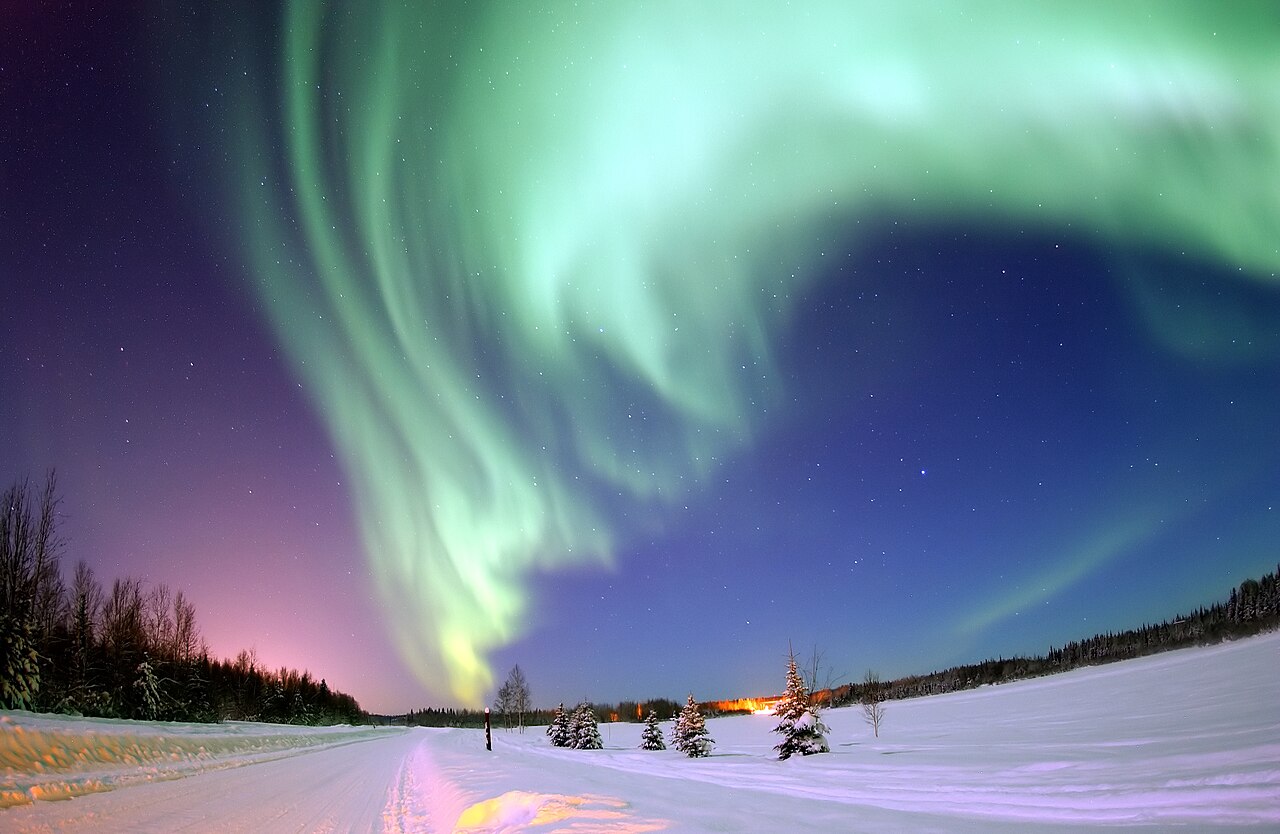
The aurora borealis, or northern lights, is one of nature's most beautiful sights. Curtains of green, purple, pink, and blue light dance across the night sky. This amazing light show happens when particles from the Sun hit gases in Earth's atmosphere. The aurora is best seen near the North and South Poles.
How Auroras Form
The Sun sends out a stream of tiny particles called the solar wind. When these particles reach Earth, our planet's magnetic field guides them toward the poles. There, the particles crash into gas molecules in the atmosphere. This collision makes the gas molecules glow, creating the beautiful colors of the aurora.
Colors of the Aurora
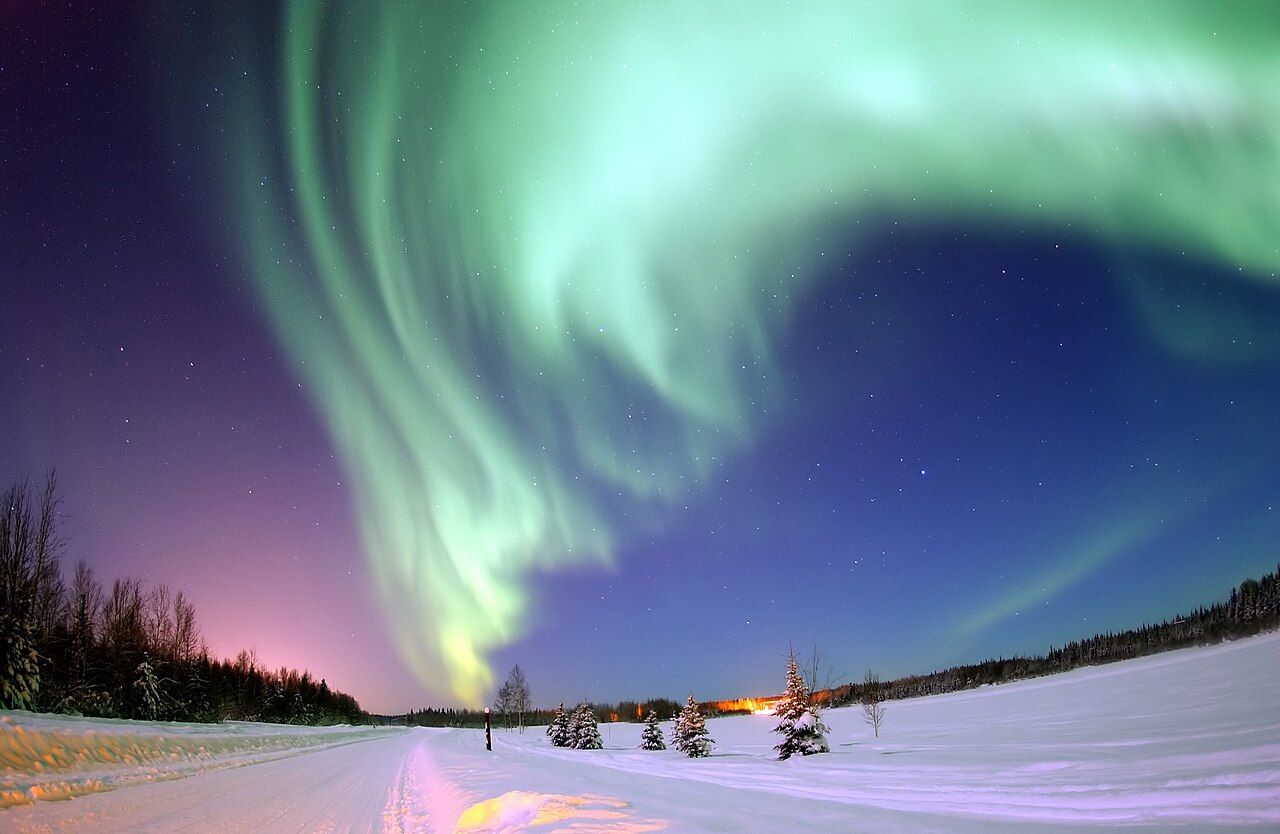
Different gases make different colors. Oxygen at high altitudes creates green and red light. Nitrogen creates blue and purple. The colors can appear as curtains, arcs, or swirling ribbons. The best time to see an aurora is on a clear, dark night in places close to the Arctic or Antarctic.
Fun Facts
- Auroras happen on other planets too. Jupiter and Saturn have some of the most spectacular auroras in the solar system.
- The southern version of the aurora is called the aurora australis, or southern lights.
- Auroras can reach as high as 200 miles above Earth's surface.
Did You Know?
Auroras can sometimes make sounds! Some people report hearing crackling, clapping, or swishing sounds during bright aurora displays. Scientists have confirmed that these sounds are real and may be caused by electrical discharges in the atmosphere about 230 feet above the ground.

You finished the article! Great job!