
Wikimedia Commons
Carbon Cycle
Carbon Cycle
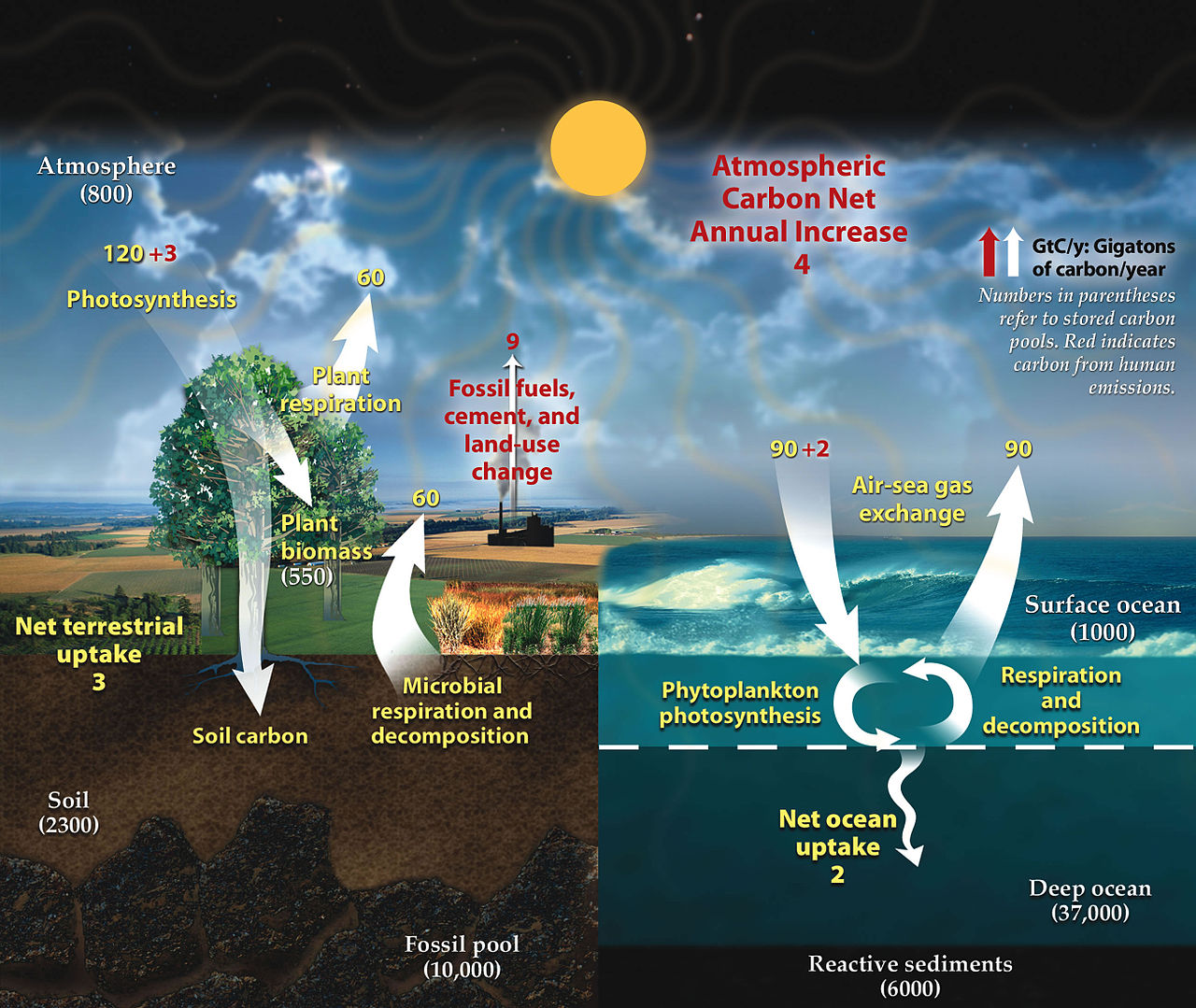
Carbon is one of the most important elements on Earth. It is in the air as carbon dioxide, in living things as part of their bodies, and in the ground as fossil fuels. Carbon is always moving between these places in a pattern called the carbon cycle. Understanding this cycle helps us understand climate change.
How Carbon Moves
Plants take carbon dioxide from the air during photosynthesis and use it to grow. Animals eat plants and breathe out carbon dioxide. When living things die, their carbon goes into the soil. Over millions of years, some carbon gets buried deep and turns into fossil fuels like coal and oil.
Humans and the Carbon Cycle
When we burn fossil fuels for energy, we release carbon that was stored underground for millions of years. This adds extra carbon dioxide to the air. Carbon dioxide traps heat in the atmosphere, causing global warming. Planting trees and using clean energy can help balance the carbon cycle.
Fun Facts
- The oceans absorb about 30 percent of the carbon dioxide that humans produce.
- Carbon can stay in the deep ocean for thousands of years.
- Volcanoes release carbon dioxide too, but much less than humans do.
Did You Know?
Coral reefs are an important part of the carbon cycle. Corals use carbon from the ocean to build their hard skeletons. Over time, these skeletons pile up and become limestone rock, locking away the carbon for millions of years. Healthy coral reefs help remove carbon from the water!

You finished the article! Great job!