
Wikimedia Commons
Fault Lines
Fault Lines
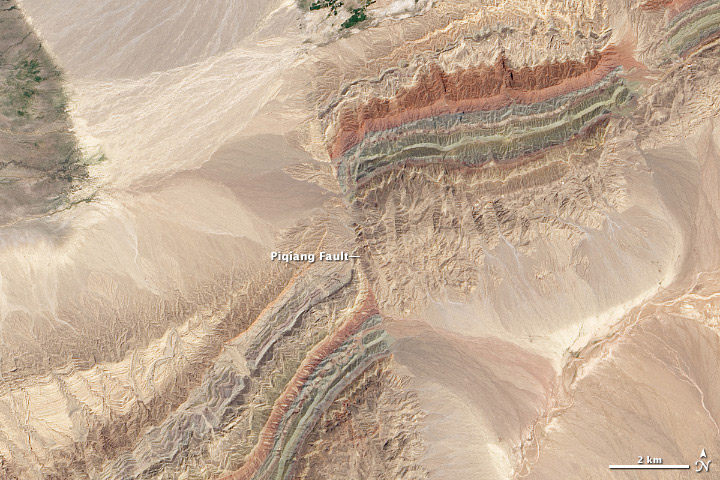
A fault line is a crack in Earth's rocky crust. On each side of the crack, huge pieces of rock can move. When the rocks suddenly slip past each other, they cause earthquakes. Fault lines are found all over the world.
How Faults Move
Rocks on one side of a fault can push up, slide down, or move sideways. The movement is usually very slow over many years. Sometimes the rocks get stuck and pressure builds up. When they finally break free, the ground shakes hard. That shaking is what we call an earthquake.
Famous Fault Lines
One of the most famous fault lines is the San Andreas Fault in California. It stretches for about 800 miles. Other big faults are found in Japan, Turkey, and New Zealand. Many faults exist deep under the oceans too. Scientists watch fault lines closely to learn about earthquakes.
Fun Facts
- The San Andreas Fault moves about 2 inches a year.
- Some fault cracks are so big you can see them from an airplane.
- The word 'fault' comes from an old word meaning 'to fail' or 'break'.
Did You Know?
Some fault lines have moved so much over millions of years that they have shifted entire mountains to new places.

You finished the article! Great job!