
Wikimedia Commons
Fiber Optics
Fiber Optics
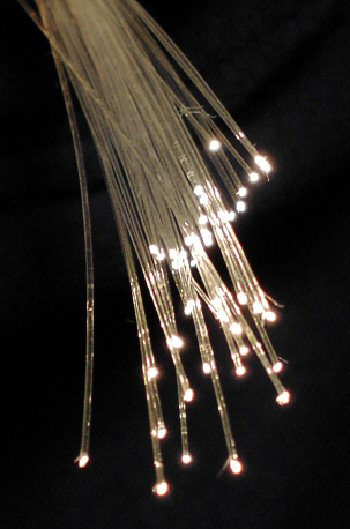
Fiber optics are thin strands of glass or plastic that carry information using light. Data travels through these fibers as tiny pulses of light at incredible speed. Fiber optic cables carry most of the world's internet data. They can send more information, faster, and farther than traditional copper wires.
How Fiber Optics Work
A fiber optic cable is thinner than a human hair. Light enters one end and bounces along the inside of the fiber, making turns without escaping. This is called total internal reflection. The light carries data in the form of on and off pulses, like a super-fast flashlight blinking. It can travel for miles without losing strength.
Fiber Optics in Our World
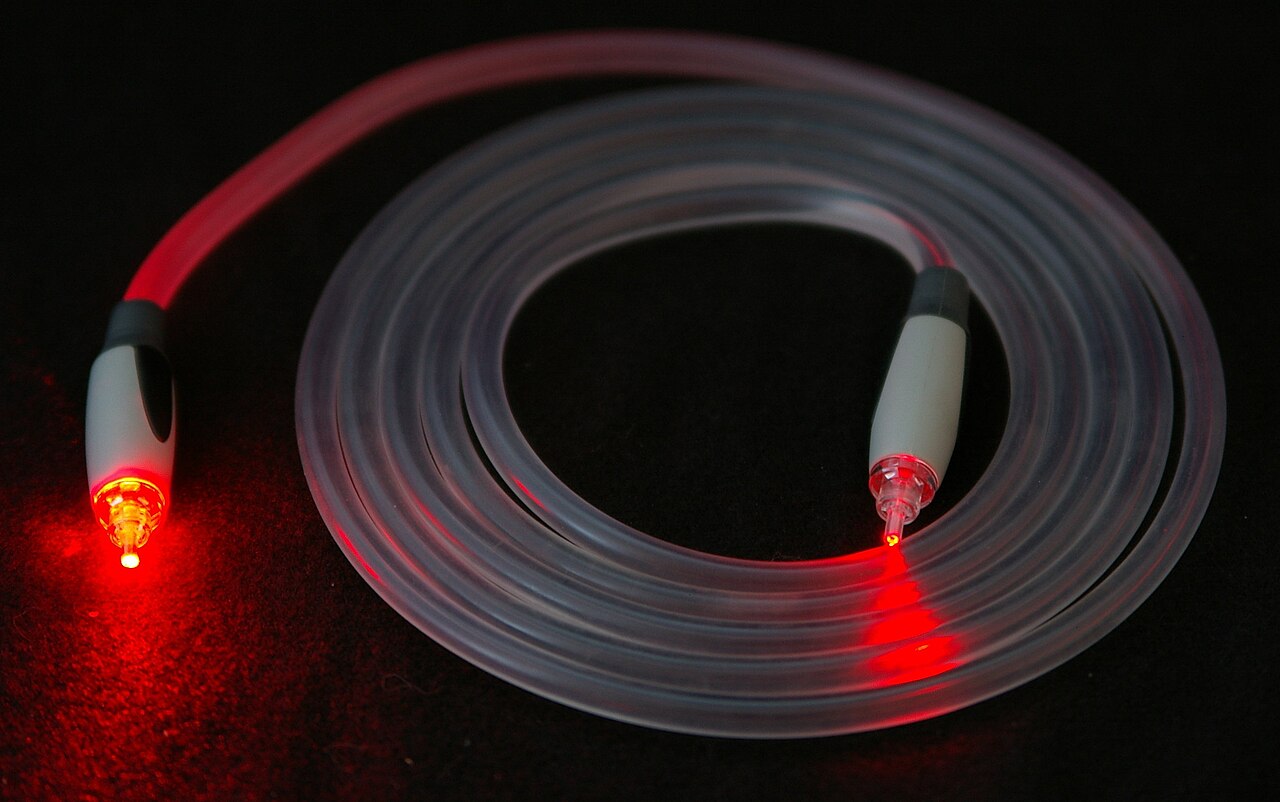
Fiber optic cables crisscross the ocean floor, connecting continents. They carry your internet data, phone calls, and video streams. Hospitals use fiber optics in tiny cameras that doctors can insert into your body to see inside. Fiber optics also light up decorative lamps and Christmas trees.
Fun Facts
- A single fiber optic cable can carry millions of phone calls at the same time.
- Light in a fiber optic cable travels at about 124,000 miles per second.
- The total length of undersea fiber optic cables is enough to go around Earth more than 25 times.
Did You Know?
Scientists recently sent data through a fiber optic cable at a record speed of 1.8 petabits per second. That is fast enough to download 200 million songs in one second! Fiber optic technology keeps getting faster, and scientists think there is still room for even more improvement.

You finished the article! Great job!