Wikimedia Commons
Frequency
Frequency
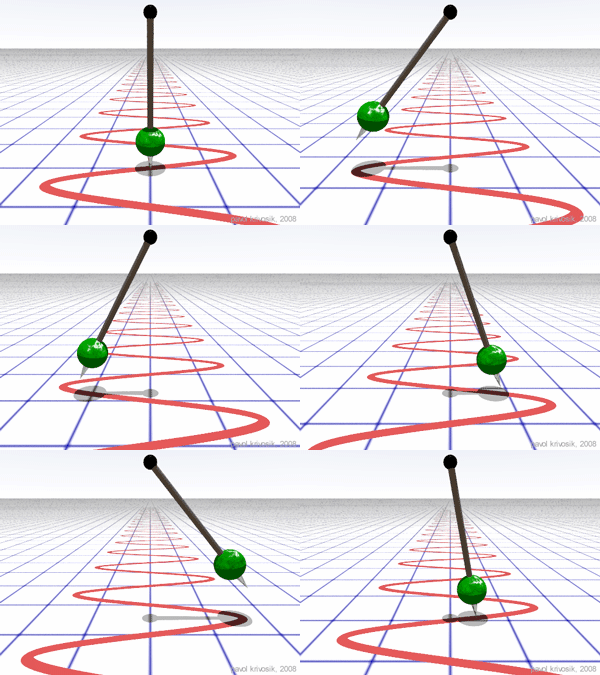
Frequency tells us how often something repeats. In science, it is used for waves like sound and light. It is measured in a unit called hertz. One hertz means one wave each second. A higher number means more waves and a faster vibration.
Frequency and Sound
Sound waves have different frequencies. Fast waves make high sounds like a whistle. Slow waves make low sounds like a drum. People can hear sounds from about 20 to 20,000 hertz. Animals like dogs and bats can hear even higher frequencies than we can.
Frequency All Around Us
Frequency is not just about sound. Light, radio, and other waves also have frequencies. Your radio picks up a station by tuning to its special frequency. Microwaves and phones also use waves with their own frequencies. Every color of light has its own frequency too.
Fun Facts
- The unit hertz is named after a scientist named Heinrich Hertz.
- A hummingbird's wings beat at a frequency of about 50 times a second.
- Red light has a lower frequency than blue light.
Did You Know?
As people get older, they often lose the ability to hear very high frequencies.

You finished the article! Great job!