
Wikimedia Commons
Geysers
Geysers
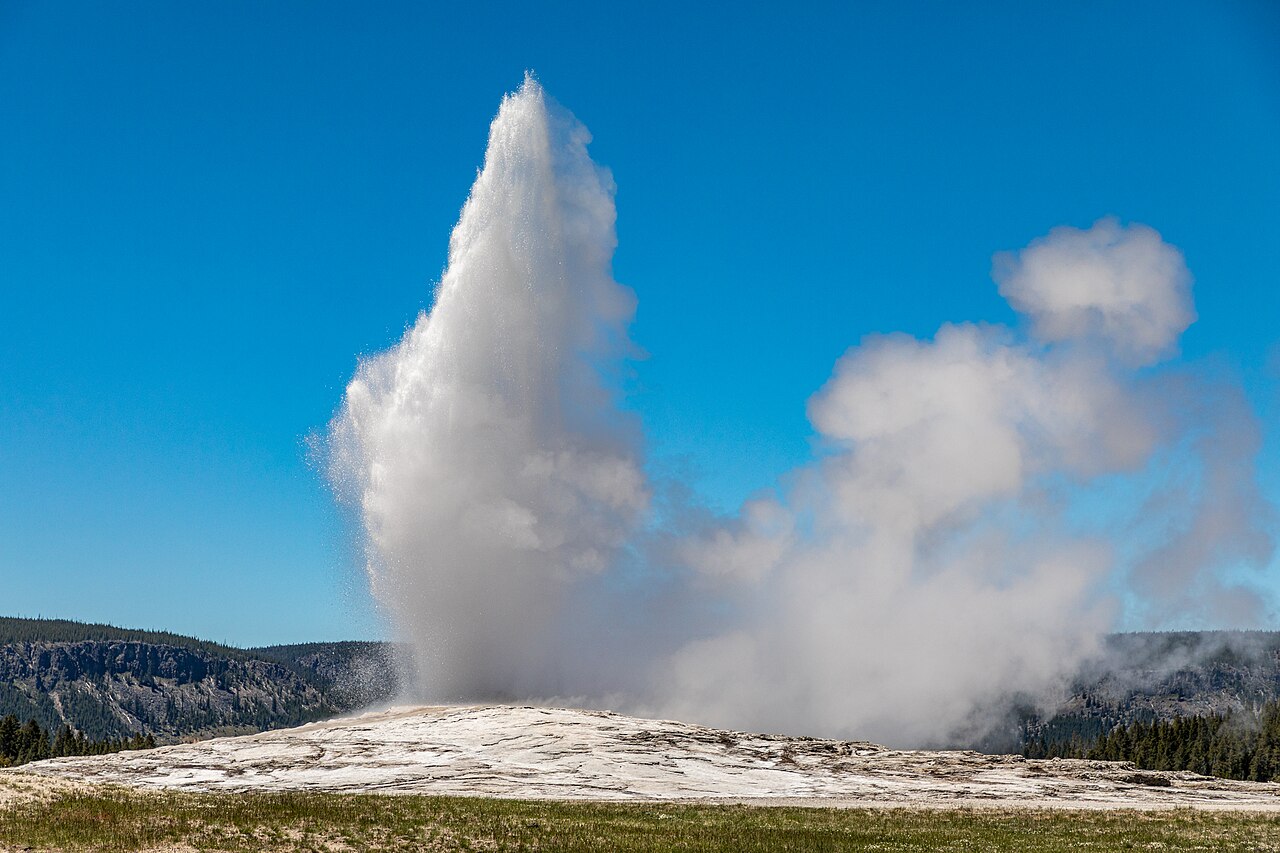
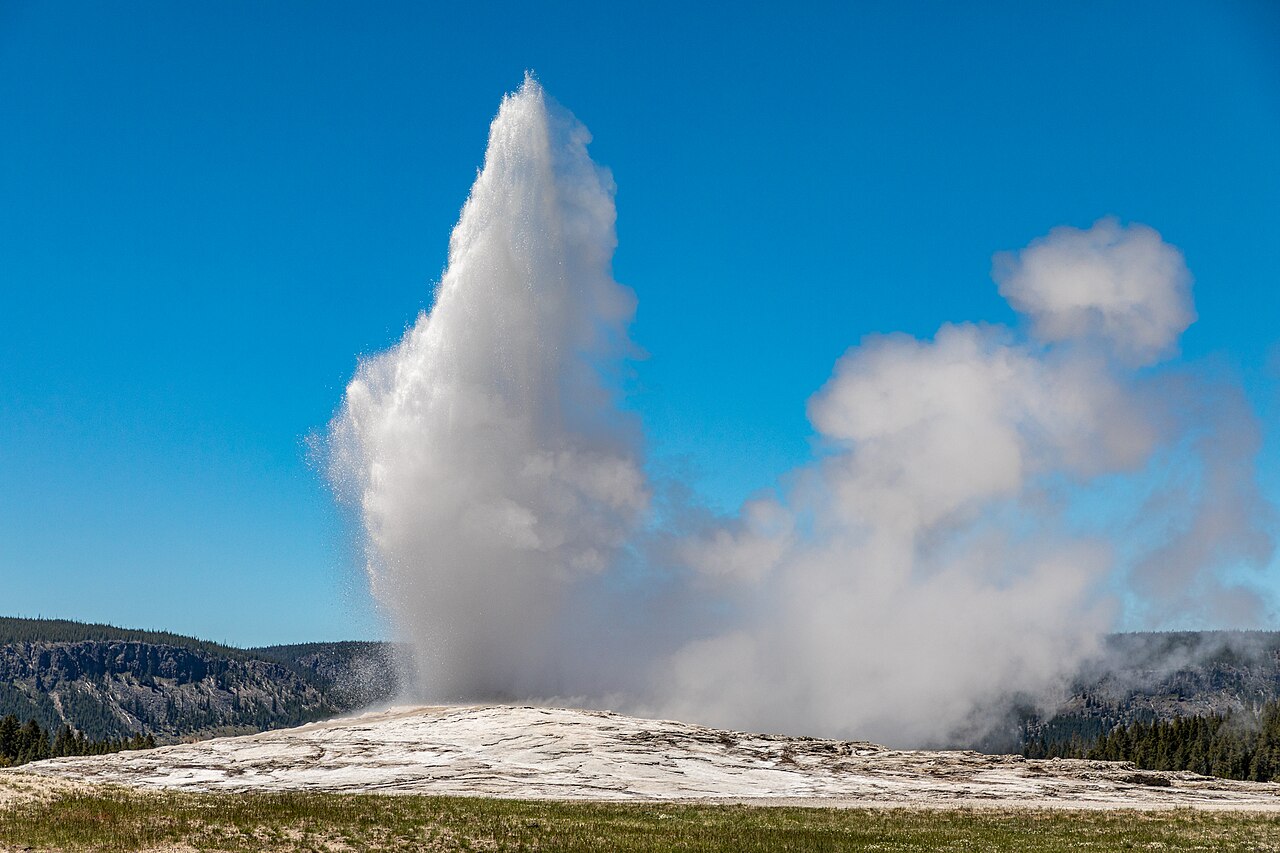
A geyser is one of nature's most spectacular sights. It is a natural fountain that shoots boiling water and steam high into the air. Geysers happen in places where hot rock from deep underground heats water near the surface. The most famous geyser in the world is Old Faithful in Yellowstone National Park.
How Geysers Work
Deep underground, hot rock heats water in underground channels. As the water gets hotter, pressure builds up because the water above keeps it from boiling. When the pressure gets too great, some water flashes into steam and pushes the rest up and out. The geyser erupts, shooting water and steam into the air.
Where Geysers Are Found
Geysers are very rare. They need three things: a source of heat, water, and a special underground plumbing system. Most geysers are found in just five places: Yellowstone in the U.S., Iceland, New Zealand, Chile, and Russia. Yellowstone has more geysers than anywhere else, with over 500.
Fun Facts
- Old Faithful erupts about every 90 minutes and shoots water up to 180 feet into the air.
- The tallest geyser in the world is Steamboat Geyser in Yellowstone, which can shoot water over 300 feet high.
- Yellowstone has about half of all the geysers on Earth.
Did You Know?
Iceland gets much of its hot water and heating from geothermal energy, the same heat that powers geysers. Nearly 90 percent of homes in Iceland are heated with geothermal hot water. Some towns even heat their sidewalks to melt snow in winter!

You finished the article! Great job!