
Wikimedia Commons
Lasers
Lasers
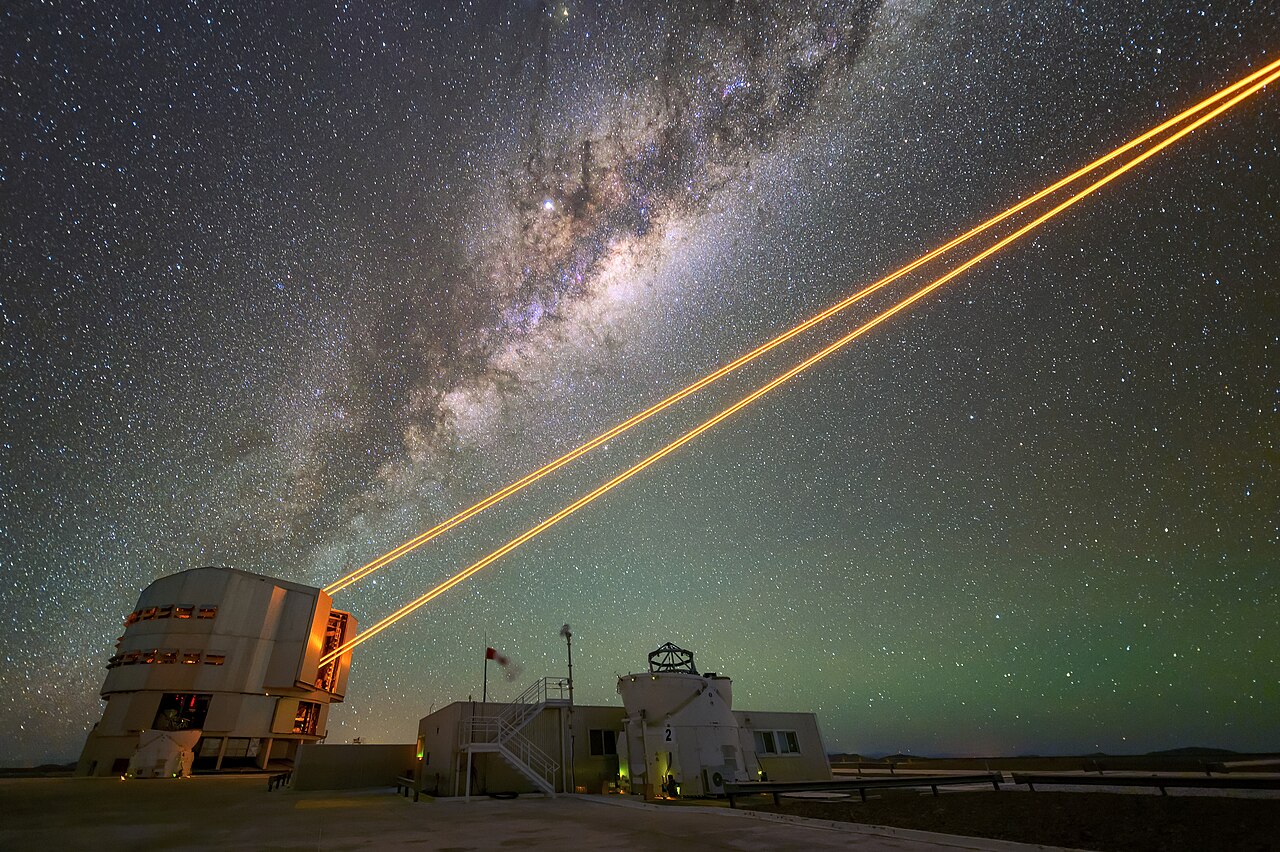
A laser produces a very special kind of light. Unlike normal light that spreads out in all directions, a laser beam is very narrow and focused. This makes it incredibly powerful. Lasers can cut through steel, perform delicate eye surgery, and even measure the distance to the Moon. The word laser stands for Light Amplification by Stimulated Emission of Radiation.
How Lasers Work
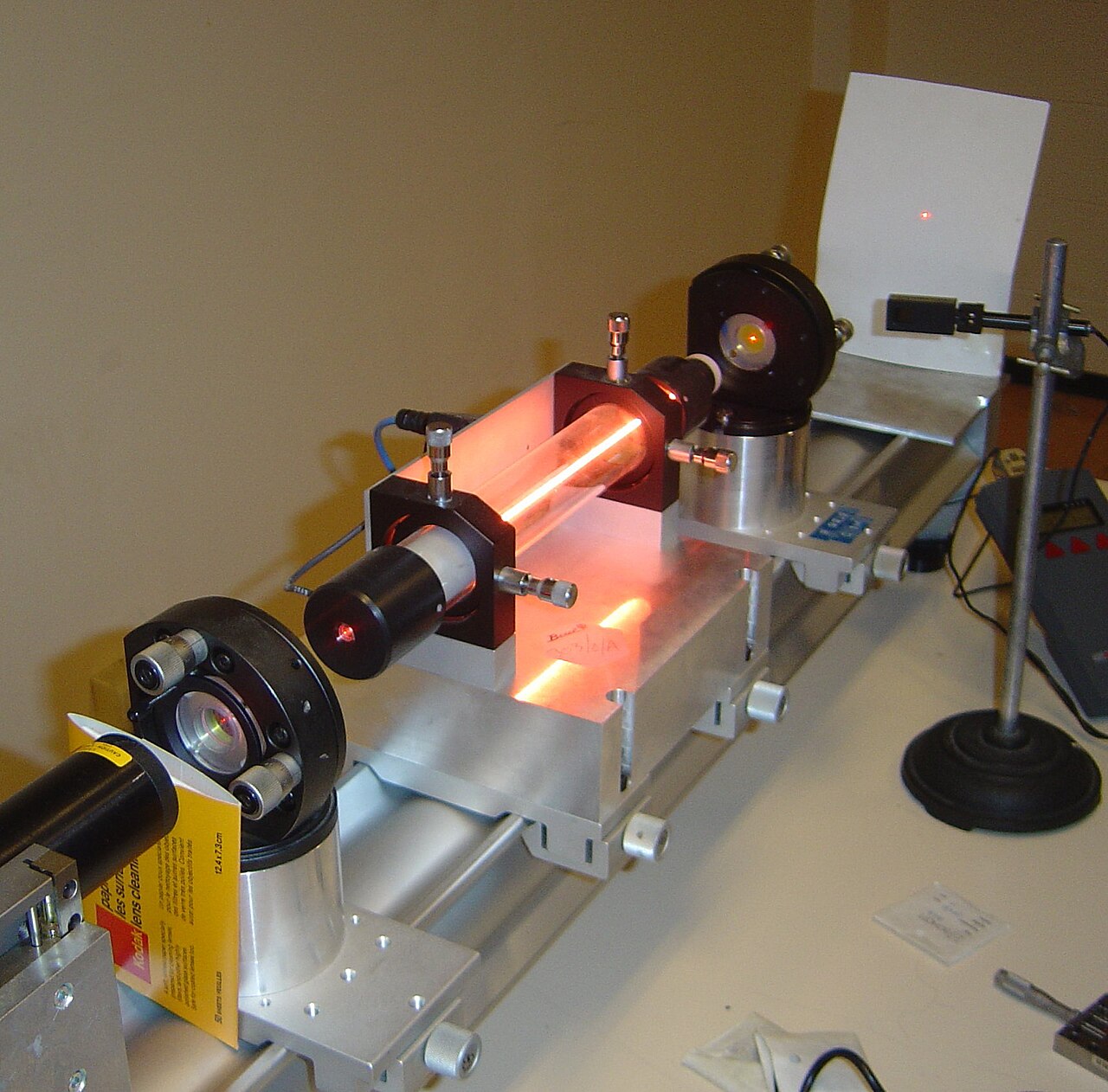
In a laser, energy is pumped into a special material. This causes atoms in the material to release photons, or particles of light. Mirrors bounce the photons back and forth, creating more and more identical photons. All these photons travel in exactly the same direction and wavelength, creating a powerful, focused beam.
Lasers in Everyday Life
Lasers are everywhere. They read barcodes at the grocery store. They play music from CDs and movies from DVDs. Laser printers use them to create text on paper. Surgeons use lasers for eye surgery and to remove tumors. Laser levels help builders make walls straight. Fiber optic internet uses laser light to carry data.
Fun Facts
- Scientists have bounced laser beams off mirrors left on the Moon by Apollo astronauts to measure the distance to the Moon within inches.
- The most powerful laser in the world can produce a beam hotter than the center of the Sun for a tiny fraction of a second.
- Laser pointers are actually very weak lasers. Industrial lasers can be millions of times more powerful.
Did You Know?
Laser stands for Light Amplification by Stimulated Emission of Radiation. When lasers were first invented in 1960, people called them a solution looking for a problem because no one was sure what to use them for. Now lasers are used in thousands of different ways!

You finished the article! Great job!