
Wikimedia Commons
Melting and Freezing
Melting and Freezing
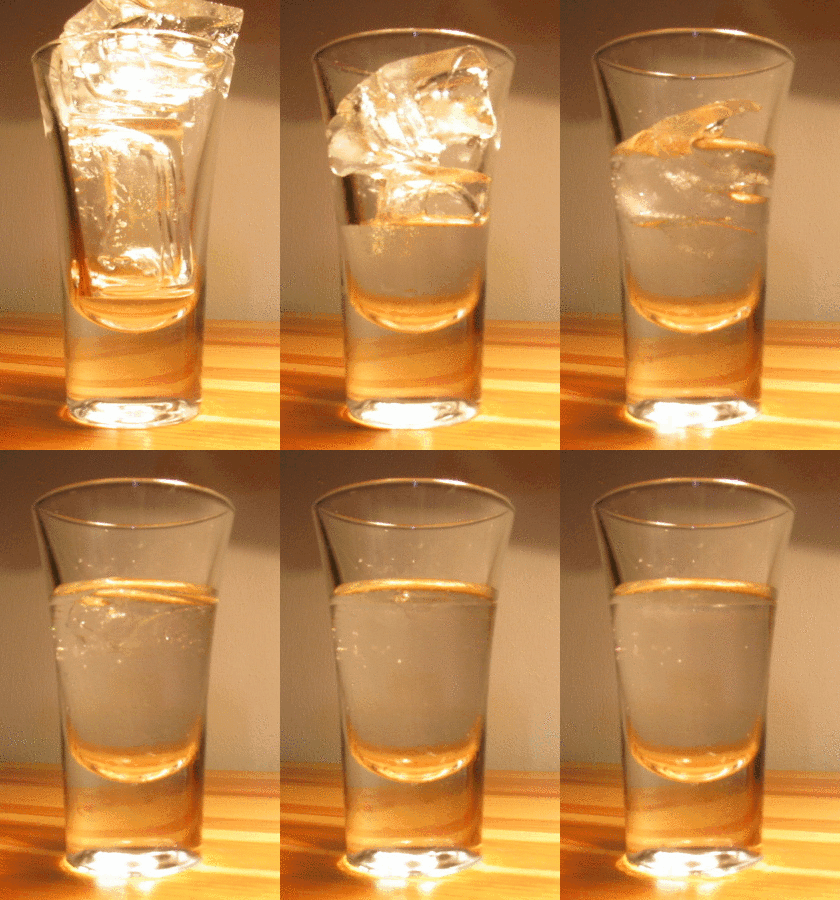
When you hold an ice cube, it slowly melts into water. When you put water in the freezer, it turns into ice. Melting happens when a solid is heated enough to become a liquid. Freezing happens when a liquid is cooled enough to become a solid. These are two important changes of state.
How Melting Works
In a solid, particles vibrate in place but stay locked together. When heat is added, the particles vibrate faster. At a certain temperature called the melting point, the particles break free and start sliding past each other. The solid has become a liquid. Ice melts at 32 degrees Fahrenheit.
How Freezing Works
Freezing is the opposite of melting. When a liquid is cooled, its particles slow down. At the freezing point, the particles lock into place and form a solid. The freezing point and melting point of a substance are the same temperature. Water freezes at 32 degrees Fahrenheit, the same temperature ice melts.
Fun Facts
- Different substances melt at very different temperatures. Iron melts at 2,800 degrees Fahrenheit.
- Chocolate melts at about 93 degrees Fahrenheit, which is just below human body temperature.
- Mercury is a metal that is liquid at room temperature because its melting point is minus 38 degrees Fahrenheit.
Did You Know?
Adding salt to ice lowers its melting point. That is why cities spread salt on icy roads in winter. The salt makes the ice melt at a lower temperature, helping to clear the roads!

You finished the article! Great job!