
Wikimedia Commons
Microscopes
Microscopes
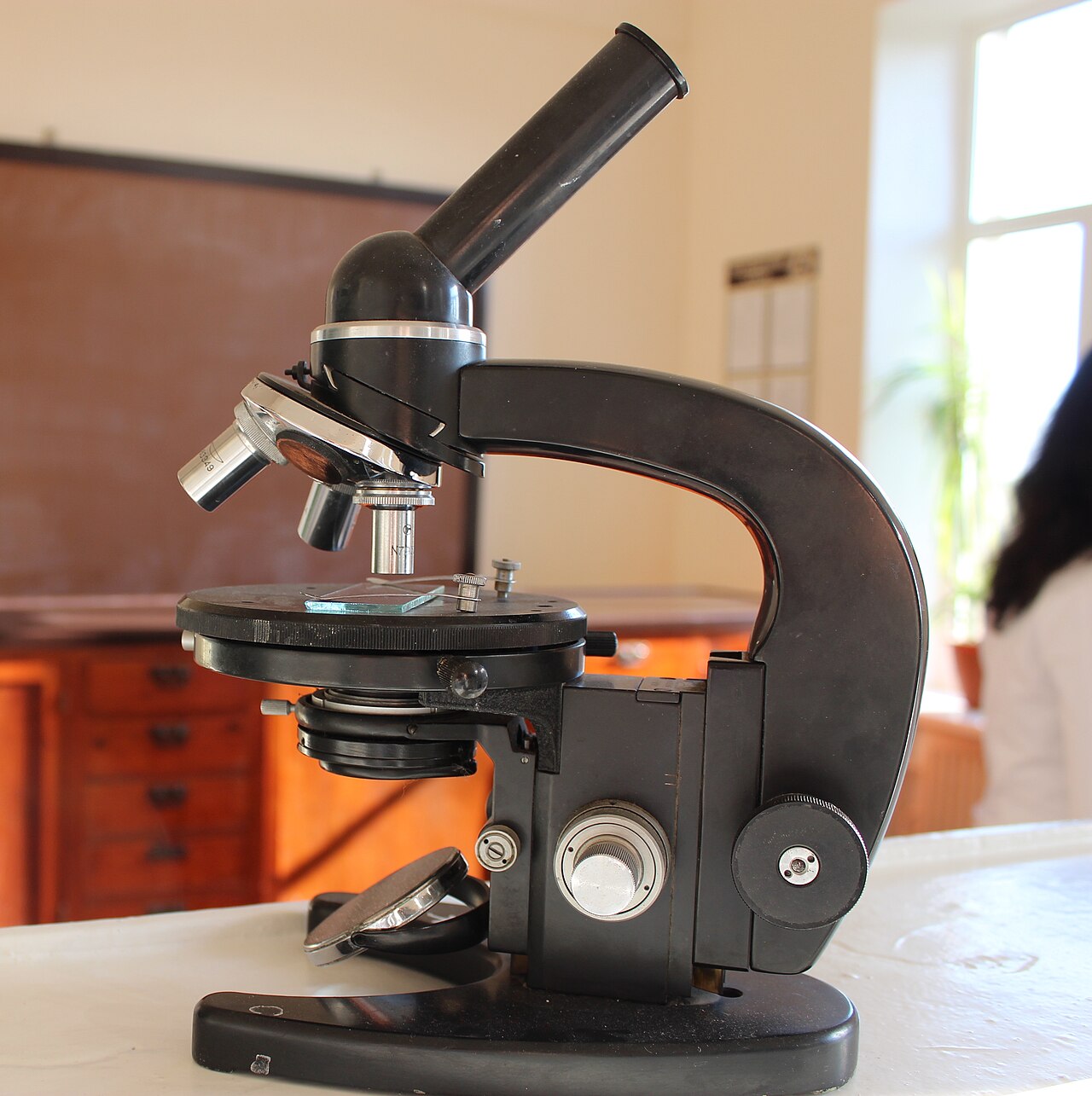
Microscopes let us see a world that is too small for our eyes. With a microscope, you can see the cells in a leaf, the bacteria on your skin, and even the tiniest parts of a computer chip. Microscopes have led to some of the biggest discoveries in science, from cells and germs to atoms.
Types of Microscopes
Light microscopes use lenses to magnify objects up to about 1,500 times. They are the kind you might use in school. Electron microscopes use beams of electrons instead of light and can magnify objects over a million times. They can show the details of viruses and even individual atoms.
What Microscopes Revealed
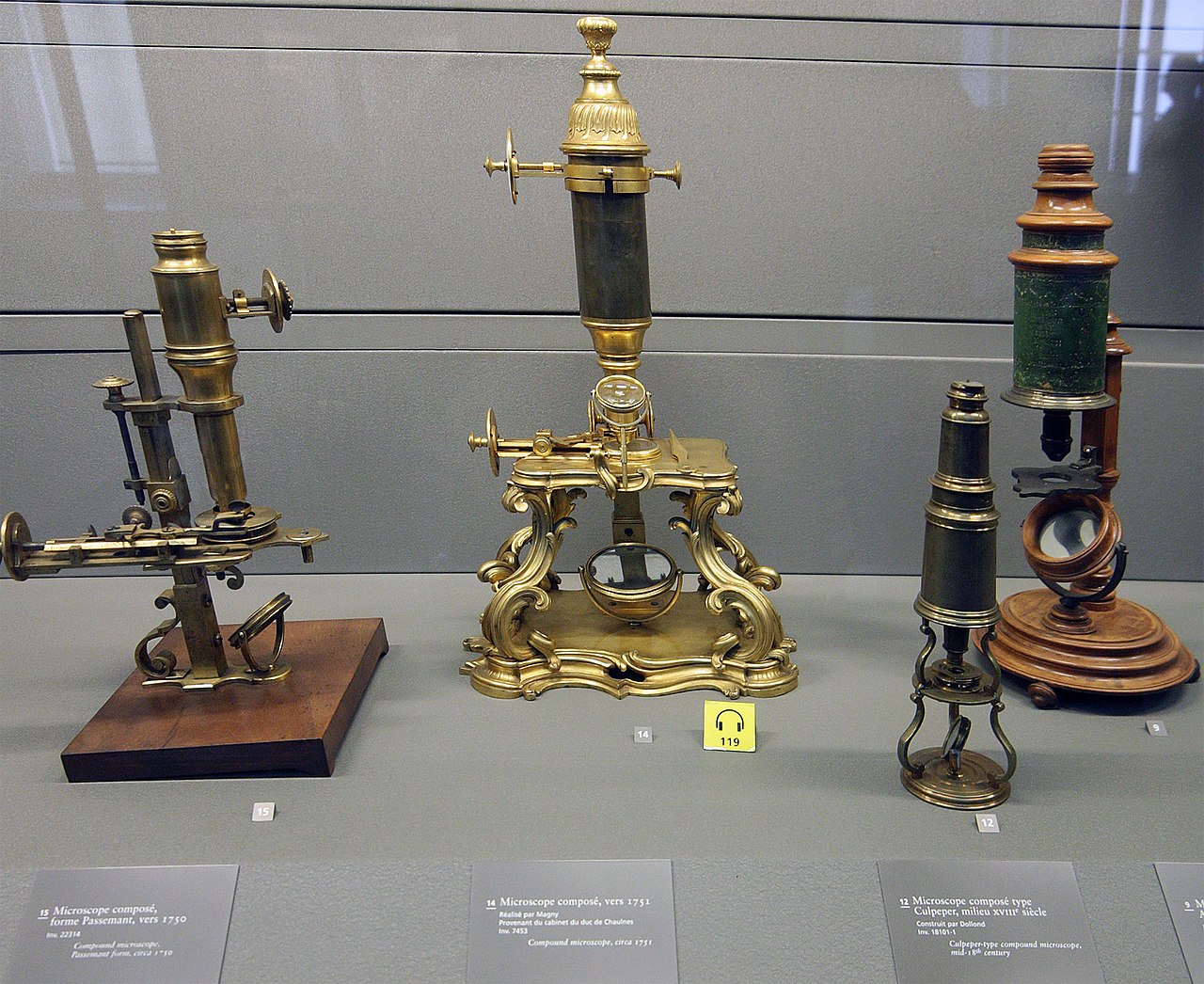
Microscopes changed science forever. In the 1600s, Robert Hooke used a microscope to discover cells. Anton van Leeuwenhoek saw bacteria for the first time. Later, microscopes revealed viruses and the structure of DNA. Without microscopes, we would know very little about how life works at the smallest level.
Fun Facts
- The most powerful electron microscopes can magnify objects over 50 million times.
- Robert Hooke named cells because they reminded him of the small rooms, or cells, that monks lived in.
- There are microscopes that can move individual atoms one at a time.
Did You Know?
Anton van Leeuwenhoek was not a trained scientist. He was a Dutch cloth merchant who made his own microscopes as a hobby. His tiny handmade lenses were so good that he was the first person to see bacteria, yeast, and blood cells. He called the tiny creatures he saw animalcules!

You finished the article! Great job!