

Wikimedia Commons
MRI Machines
MRI Machines
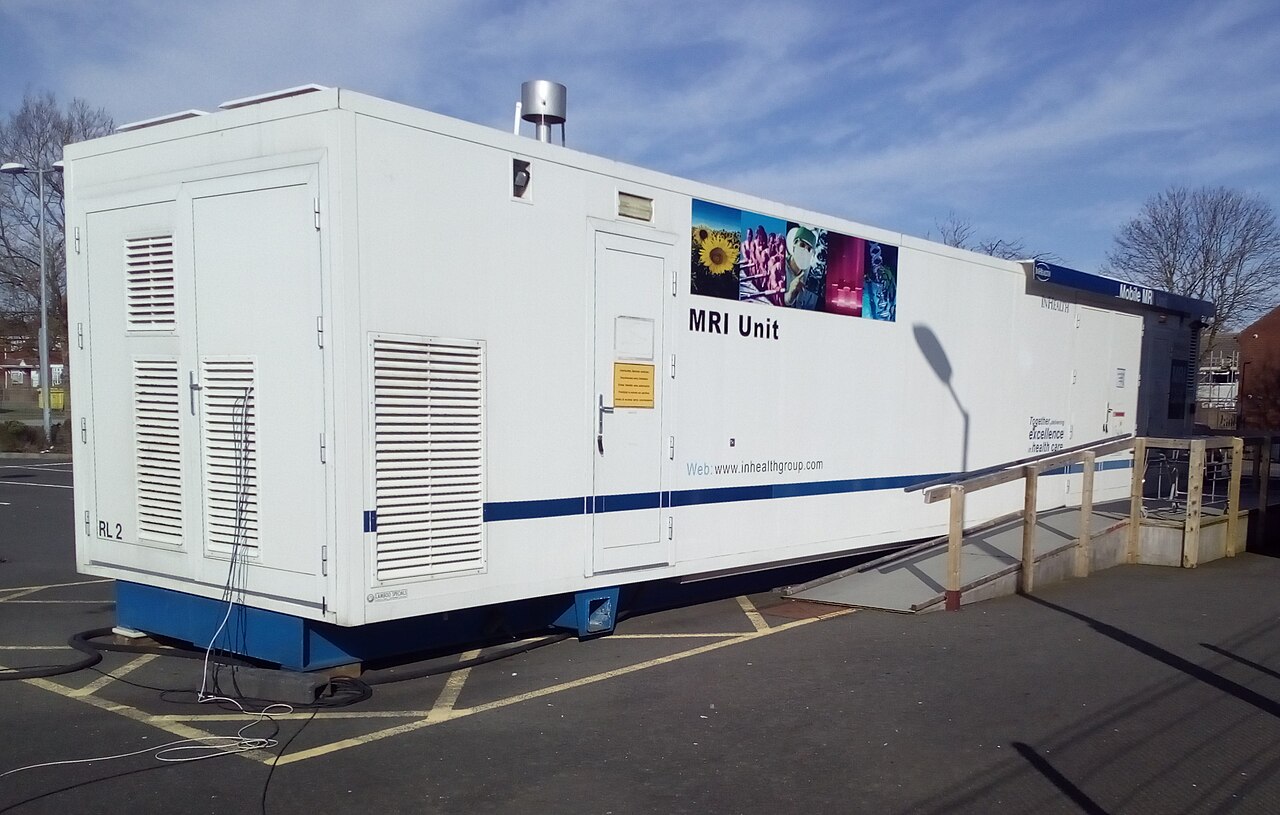
An MRI machine can take amazing pictures of the inside of your body without any surgery. MRI stands for Magnetic Resonance Imaging. It uses a powerful magnet and radio waves to see your organs, muscles, and brain in great detail. MRI scans help doctors find injuries and diseases that X-rays cannot show.
How MRI Works
Your body is mostly water, and water contains hydrogen atoms. An MRI machine has a very powerful magnet that makes the hydrogen atoms in your body line up in the same direction. Then radio waves are sent through your body, making the atoms give off tiny signals. A computer turns these signals into detailed pictures.
What MRI Can See
MRI is great at showing soft tissues like the brain, muscles, and organs. Doctors use it to look for brain tumors, torn ligaments, and heart problems. Unlike X-rays, MRI does not use radiation, so it is very safe. The biggest downside is that MRI machines are loud and you have to lie very still inside a tunnel.
Fun Facts
- An MRI magnet is about 60,000 times stronger than Earth's magnetic field.
- A full body MRI scan contains about 100 to 1,000 images.
- You have to remove all metal before going into an MRI because the powerful magnet can pull metal objects toward it.
Did You Know?
MRI machines are so powerful that they have to be kept on all the time. It takes many hours and lots of electricity to power up the magnet, and shutting it down is called a quench. A quench releases the super-cold helium that keeps the magnet working and can fill the room with gas. That is why MRI magnets run 24 hours a day, 7 days a week!

You finished the article! Great job!