
Wikimedia Commons
Plate Tectonics
Plate Tectonics
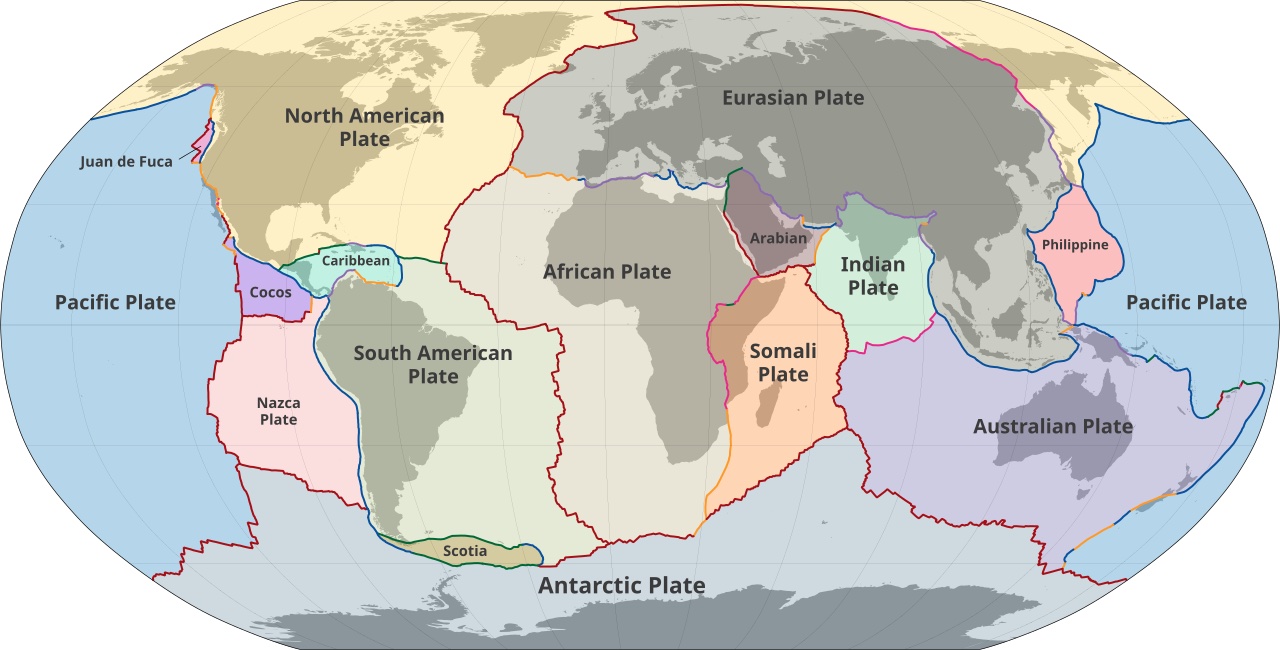
Earth's surface is not one solid piece. It is broken into about 15 large pieces called tectonic plates that float on hot, soft rock below. These plates move very slowly, just a few inches per year. Where plates meet, amazing things happen. Earthquakes shake the ground, volcanoes erupt, and mountains rise up.
How Plates Move
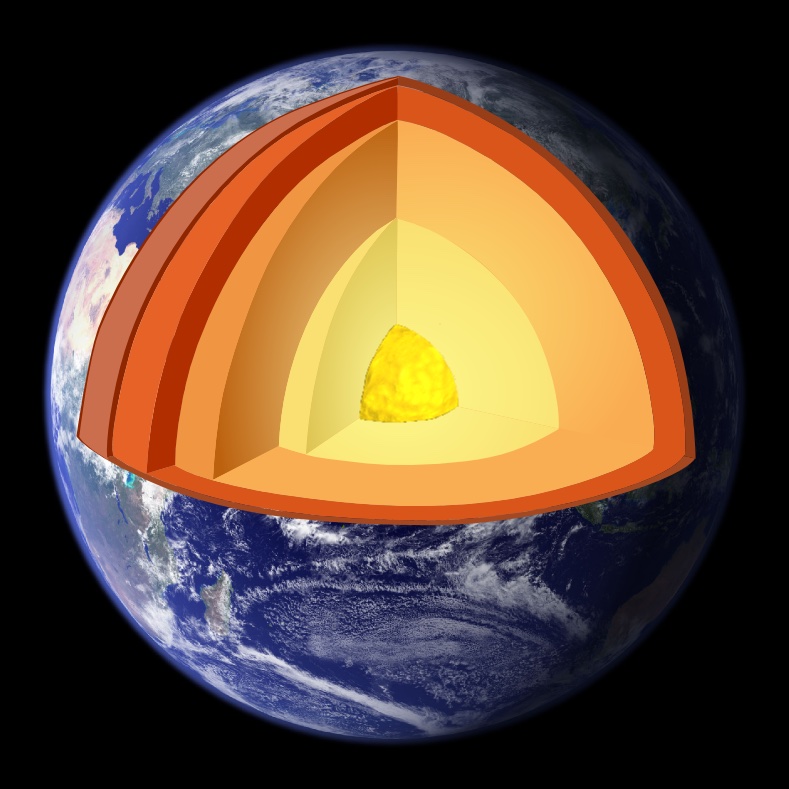
Tectonic plates float on a layer of hot, soft rock called the mantle. Heat from deep inside Earth causes the mantle to flow very slowly in huge circles. This movement drags the plates along. Some plates push together, some pull apart, and some slide past each other.
What Happens at Plate Boundaries
When plates push together, one can slide under the other, creating deep ocean trenches and volcanoes. When plates pull apart, magma rises up to fill the gap, creating new rock. When plates slide past each other, they can get stuck and then suddenly slip, causing earthquakes. The San Andreas Fault in California is a sliding boundary.
Fun Facts
- The Himalayas, the tallest mountains on Earth, formed when the Indian plate crashed into the Asian plate.
- The Atlantic Ocean is getting about one inch wider every year as plates pull apart.
- Most earthquakes and volcanoes happen along the edges of tectonic plates.
Did You Know?
The Ring of Fire is a horseshoe-shaped zone around the Pacific Ocean where about 75 percent of the world's volcanoes are found and about 90 percent of earthquakes occur. It follows the edges of several tectonic plates. That is why countries like Japan and Chile have so many earthquakes!

You finished the article! Great job!