
Wikimedia Commons
Seasons
Seasons
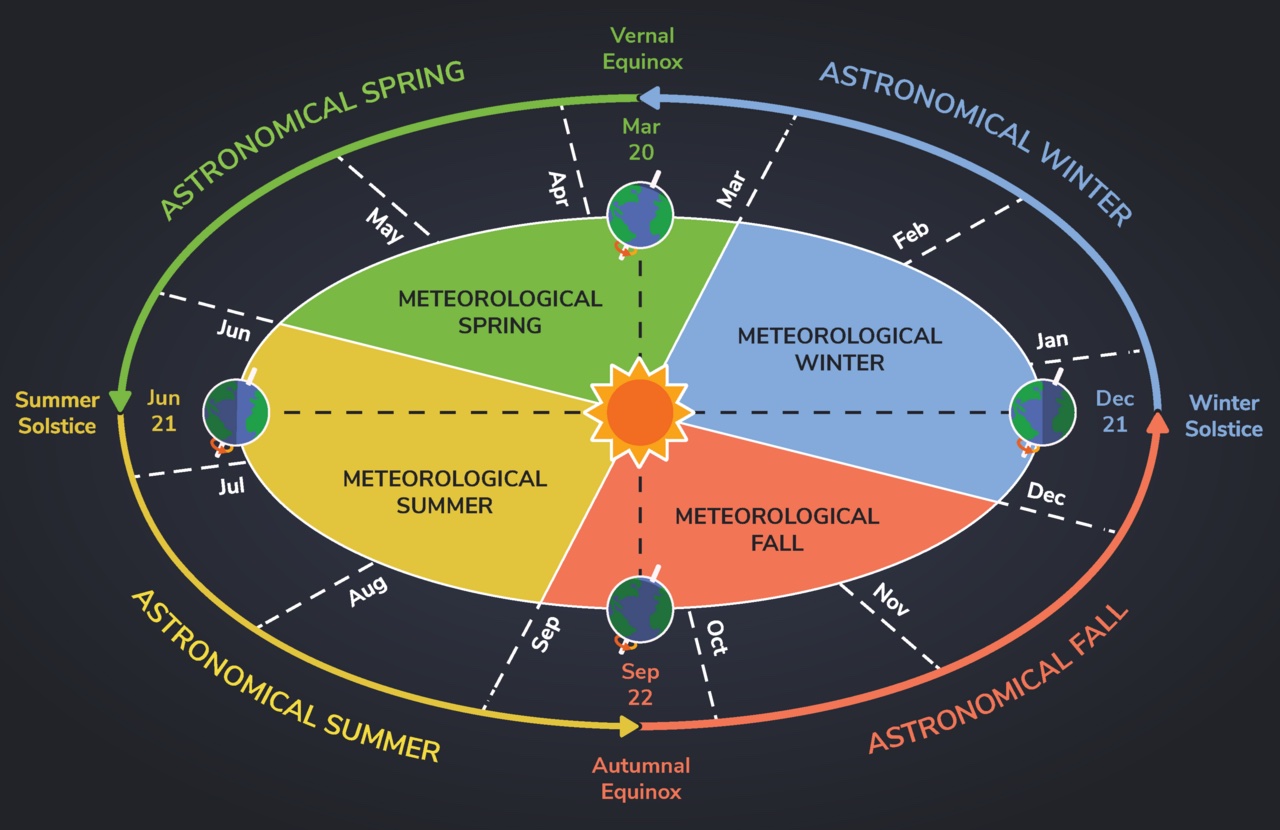
Spring, summer, fall, and winter are the four seasons. But have you ever wondered why we have seasons? It is not because Earth moves closer to or farther from the Sun. Seasons happen because Earth is tilted! As Earth orbits the Sun, the tilt makes different parts of Earth lean toward or away from the Sun.
Why Earth Has Seasons
Earth is tilted at about 23.5 degrees. When the Northern Hemisphere tilts toward the Sun, it gets more direct sunlight and has summer. At the same time, the Southern Hemisphere tilts away and has winter. Six months later, the positions switch. The tilt stays the same all year, but which hemisphere faces the Sun changes.

Seasons Around the World
Not everywhere has four seasons. Near the equator, the temperature stays warm all year. These areas often have just a wet season and a dry season. The North and South Poles have extreme seasons with months of constant daylight in summer and months of darkness in winter.
Fun Facts
- When it is summer in the United States, it is winter in Australia.
- At the equator, days are almost exactly 12 hours long all year round.
- Mercury has almost no tilt, so it does not have seasons.
Did You Know?
Earth is actually closest to the Sun in January, during the Northern Hemisphere's winter. It is farthest in July, during summer. This proves that distance from the Sun does not cause the seasons. It is all about the tilt!

You finished the article! Great job!