
Popular Science Monthly / Wikimedia Commons
Sound
Sound
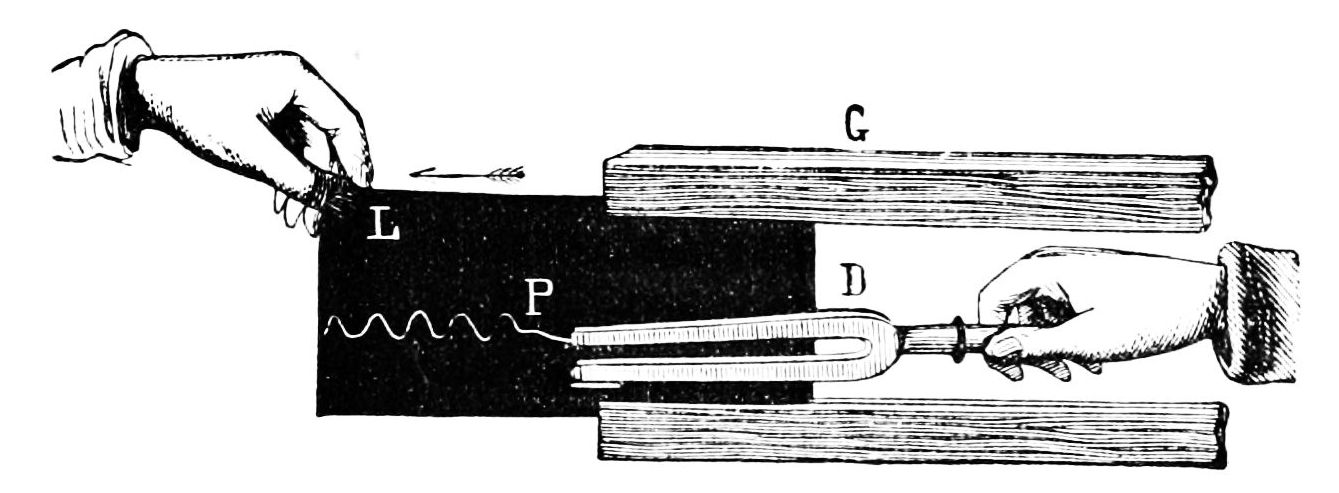
Sound begins with vibration. When something vibrates, it pushes and pulls nearby particles. Those pushes travel as sound waves through air, water, or solids. Your ears detect the waves, and your brain turns them into what you hear.
Sound Waves
Sound needs matter to travel through, so it cannot move through empty space. It often travels faster through water than through air, and faster through many solids than through water. Loud sounds have bigger vibrations. High sounds have faster vibrations.
Very Loud Sounds
The loudest recorded sound in history came from the Krakatoa volcanic eruption in 1883. It was heard thousands of miles away. Some animals make amazing sounds too. A pistol shrimp snaps its claw so fast that it creates a tiny collapsing bubble underwater, making a sharp pop louder than many people expect.
Your Voice
Your recorded voice can sound strange because you normally hear yourself in two ways: through the air and through vibrations traveling through bones in your head. A recording only captures the air part, so it sounds different.
Fun Facts
- A sonic boom happens when something travels faster than the speed of sound.
- Powerful focused sound waves can heat tiny amounts of water in special experiments.
- Doctors use sound waves in ultrasound machines to make pictures inside the body.
Did You Know?
Sound is measured in decibels. Very loud sounds can damage hearing, so ear protection matters around fireworks, concerts, and loud machines.

You finished the article! Great job!