
Wikimedia Commons
Space Stations
Space Stations
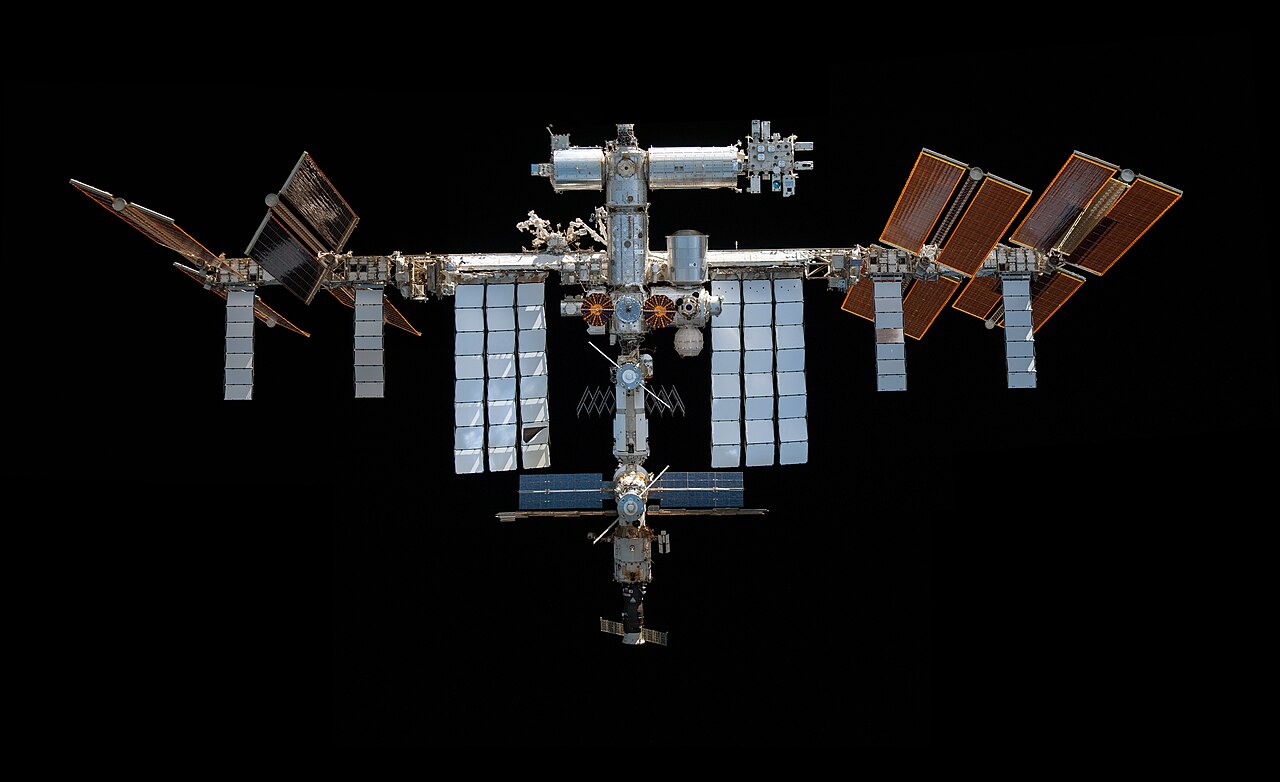
A space station is a home in space where astronauts live and work for months at a time. The International Space Station, or ISS, orbits about 250 miles above Earth. It is as big as a football field and has been continuously occupied since the year 2000. Astronauts on the ISS do science experiments that cannot be done on Earth.
Life on the Space Station
Life on the ISS is very different from life on Earth. Astronauts float because they are in free fall around Earth. They strap themselves into sleeping bags so they do not drift around at night. Food comes in special packages. Water is recycled, even from sweat and breath. Astronauts exercise two hours a day to keep their muscles strong.
Science in Space
The ISS is a flying laboratory. Scientists study how plants grow without gravity. They research new medicines and materials. They observe Earth and study climate change. The microgravity environment lets scientists do experiments impossible on Earth. Research on the ISS has led to many discoveries.
Fun Facts
- The ISS orbits Earth about 16 times every day, seeing 16 sunrises and sunsets.
- The ISS has been lived in continuously for over 20 years.
- You can sometimes see the ISS from the ground. It looks like a bright, fast-moving star.
Did You Know?
Astronauts on the ISS drink recycled water, including water recovered from their own sweat and urine! Special machines filter and purify the water until it is cleaner than most tap water on Earth. Astronaut Peggy Whitson once said the coffee on the ISS is great, and yesterday's coffee becomes tomorrow's coffee!

You finished the article! Great job!