
Wikimedia Commons
The Cell Nucleus
The Cell Nucleus
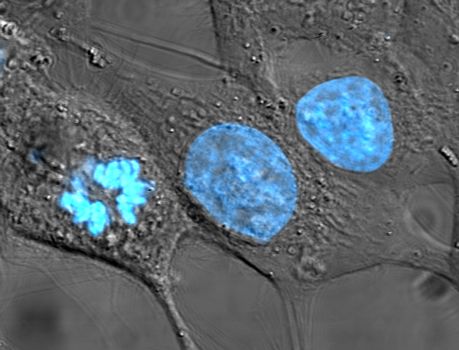
The nucleus is a very important part of a cell. You can think of it as the boss of the cell. It sits in the middle, like a yolk in an egg. Inside the nucleus is the cell's DNA. DNA holds all the instructions for life.
The Control Center
The nucleus tells the rest of the cell what to do. It sends out messages based on the DNA inside it. These messages help the cell make proteins and grow. Without a nucleus, the cell would not know how to work. Almost every cell in your body has one nucleus.
Keeping DNA Safe
The nucleus is wrapped in a soft cover called a membrane. The membrane protects the DNA inside. It has tiny holes that let messages go in and out. When a cell is about to split in two, the DNA copies itself inside the nucleus. This way, each new cell gets a full set of instructions.
Fun Facts
- Red blood cells in humans do not have a nucleus.
- The word 'nucleus' means 'little nut' in Latin.
- The nucleus was first seen in the 1830s by a scientist named Robert Brown.
Did You Know?
If you took the DNA from just one cell nucleus and stretched it out, it would be about 6 feet long.

You finished the article! Great job!