Wikimedia Commons
The pH Scale
The pH Scale
The pH scale tells scientists how sour or soapy a liquid is. It runs from 0 to 14. A low number means acidic, like lemon juice. A high number means basic, like soap. The middle number, 7, is neutral, like pure water.
Acids and Bases
Acids usually taste sour. Lemons, vinegar, and orange juice are acids. Bases often feel slippery, like soap. Baking soda and ammonia are bases. Mixing an acid with a base can make them cancel each other out. This is called neutralizing.
Testing pH
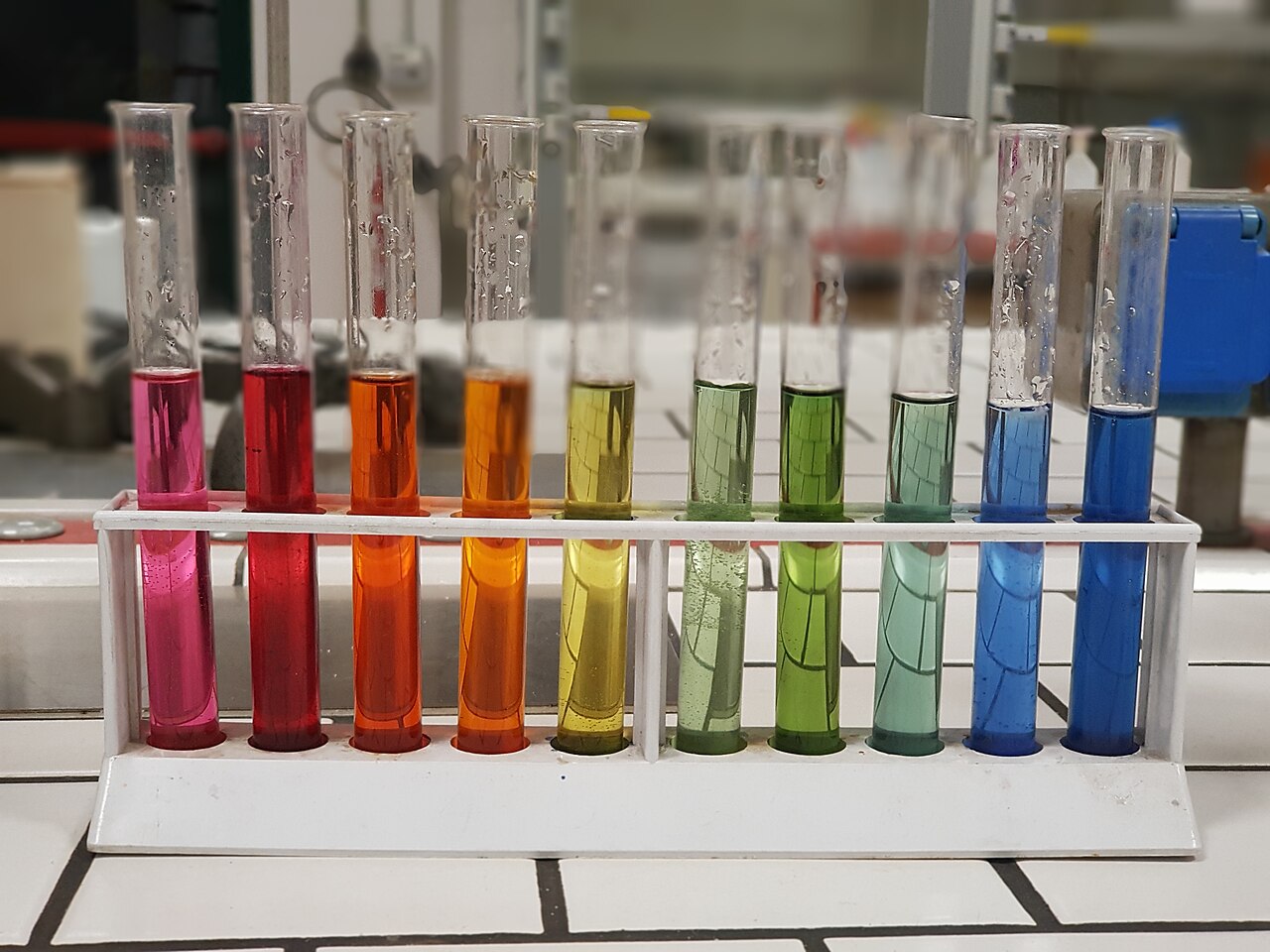
Scientists use special paper called litmus paper to test pH. It changes color when it touches a liquid. Red means acid, and blue means base. You can even use purple cabbage juice as a pH test at home. Each color matches a number on the pH scale.
Fun Facts
- Stomach acid has a pH of about 2, strong enough to dissolve metal.
- Bleach is very basic, with a pH near 13.
- Pure water is perfectly neutral at pH 7.
Did You Know?
The letters pH stand for 'potential of hydrogen,' which refers to the tiny hydrogen bits in a liquid.

You finished the article! Great job!