
Wikimedia Commons
The Phosphorus Cycle
The Phosphorus Cycle
Phosphorus is a chemical element that all living things need. It helps build strong bones, teeth, and DNA. Unlike nitrogen and carbon, phosphorus does not float in the air. It starts in rocks and moves through soil, water, and living things. The phosphorus cycle is one of the slowest natural cycles.
From Rocks to Life
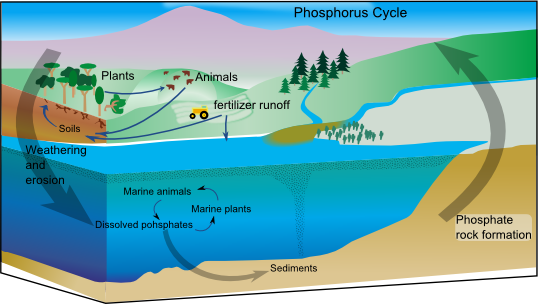
Phosphorus starts locked inside rocks. Over time, weathering breaks the rocks down and releases phosphorus into the soil. Plants absorb phosphorus through their roots. Animals get phosphorus by eating plants or other animals. Phosphorus is important for making DNA, bones, and cell membranes.
Returning Phosphorus
When plants and animals die, decomposers break them down and release phosphorus back into the soil. Some phosphorus washes into rivers and eventually the ocean. Over millions of years, phosphorus in the ocean settles on the bottom and forms new rock. The cycle is very slow from start to finish.
Fun Facts
- Phosphorus was discovered in 1669 by a German alchemist who was experimenting with urine.
- Too much phosphorus in lakes and rivers from fertilizer runoff can cause harmful algae blooms.
- Your bones and teeth contain a lot of phosphorus in the form of calcium phosphate.
Did You Know?
Guano, or bird droppings, is rich in phosphorus and was once so valuable that countries fought wars over islands covered in it. Guano was used as fertilizer to help crops grow!

You finished the article! Great job!