
Wikimedia Commons
Tides
Tides
If you spend a day at the beach, you will notice the water rises and falls. These changes are called tides. Tides happen because the Moon's gravity pulls on Earth's oceans. Most beaches have two high tides and two low tides every day. The difference between high and low tide can be a few feet or over 40 feet!
How Tides Work
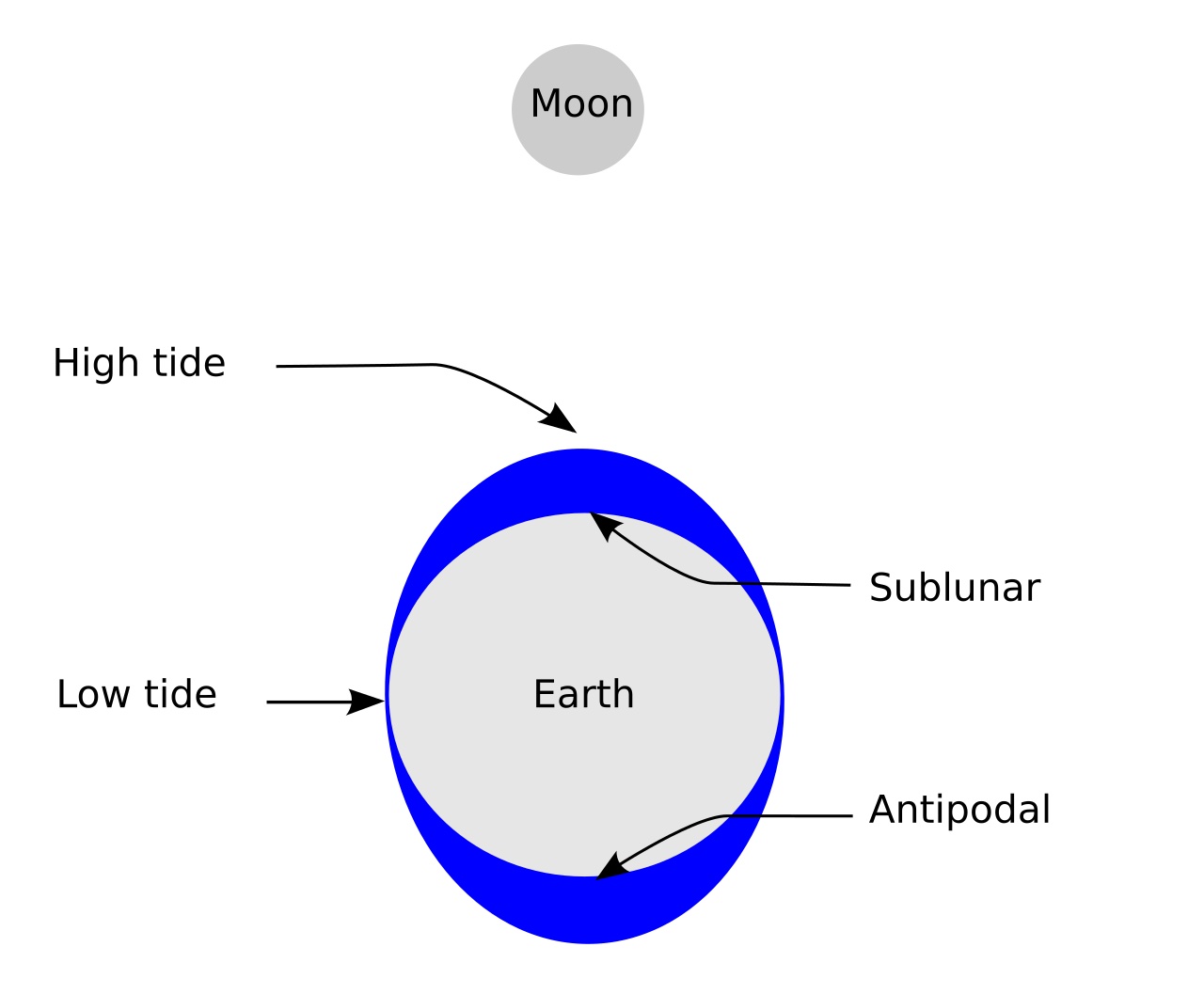
The Moon's gravity pulls on Earth's oceans, making the water bulge toward the Moon. There is also a bulge on the opposite side of Earth. As Earth rotates, different places move through these bulges, experiencing high and low tides. The Sun's gravity also affects tides, but less than the Moon because it is much farther away.
Spring and Neap Tides
When the Sun and Moon line up during a full moon or new moon, their gravity combines to make extra high and extra low tides called spring tides. When the Sun and Moon are at right angles to each other, during a quarter moon, the tides are smaller. These are called neap tides.
Fun Facts
- The Bay of Fundy in Canada has the highest tides in the world, reaching over 50 feet.
- The Moon is slowly moving away from Earth, about 1.5 inches per year. In the far future, tides will be weaker.
- Some marine animals like crabs and horseshoe crabs time their breeding to match the tides.
Did You Know?
Tidal power is a way to make clean electricity from the movement of tides. As water flows in and out with the tide, it can spin turbines to generate power. Unlike solar and wind power, tidal power is very predictable because we know exactly when tides will happen!

You finished the article! Great job!