
Wikimedia Commons
Water Cycle
Water Cycle
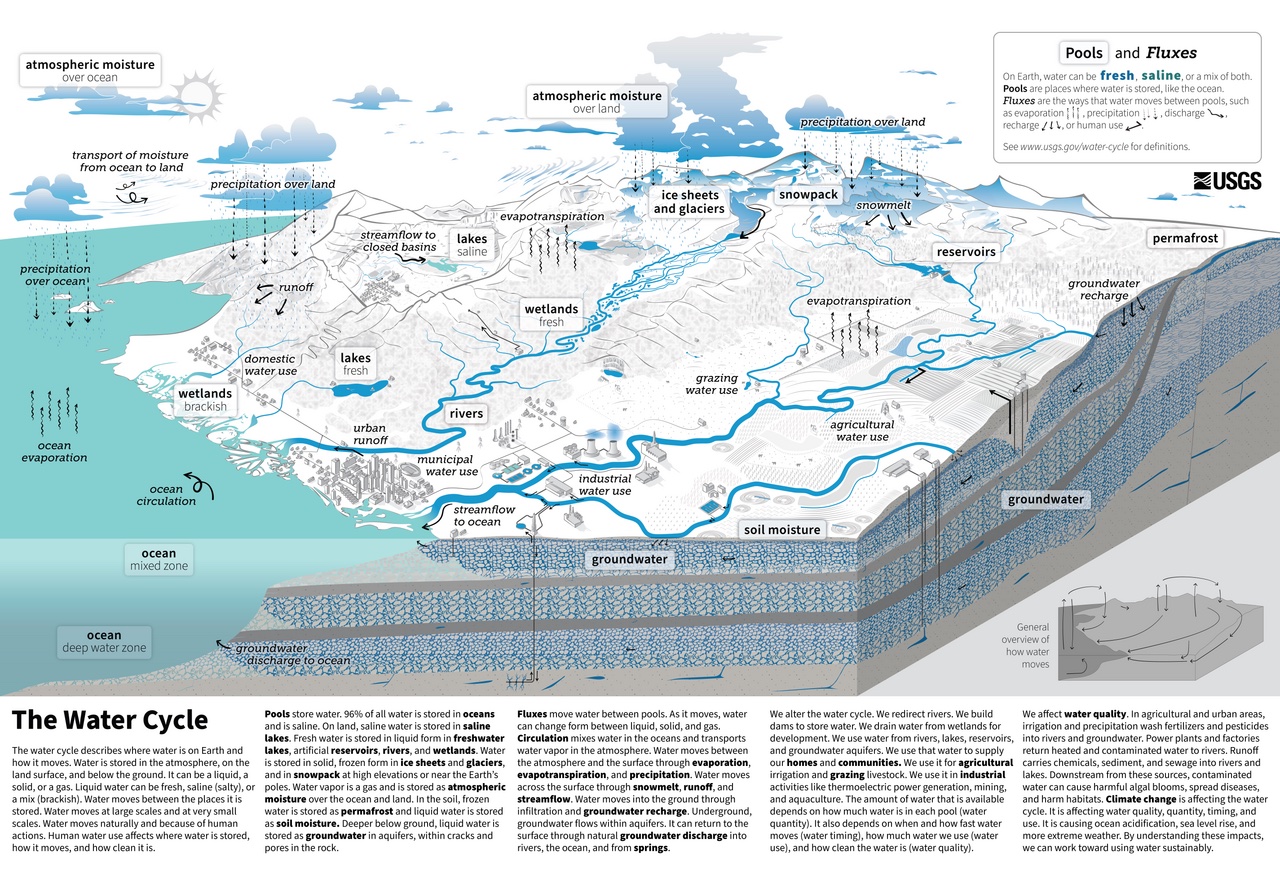
Water is always on the move. It goes up into the sky, forms clouds, falls as rain or snow, flows into rivers and oceans, and starts all over again. This never-ending journey is called the water cycle. The same water has been cycling around Earth for billions of years. You might drink the same water a dinosaur once drank!
Steps of the Water Cycle
The water cycle has several steps. Evaporation happens when the Sun heats water and turns it into invisible vapor that rises into the air. Condensation occurs when the vapor cools and forms tiny droplets that make clouds. Precipitation is when water falls from clouds as rain, snow, or hail. Collection is when water gathers in rivers, lakes, and oceans.
Why the Water Cycle Matters
The water cycle is what brings fresh water to the land. Ocean water is salty, but when it evaporates, the salt stays behind. The water vapor turns into fresh water rain. This fills rivers and lakes with the clean water that plants, animals, and people need to survive.
Fun Facts
- About 97 percent of Earth's water is salt water in the oceans. Only 3 percent is fresh water.
- A water molecule spends an average of about 9 days in the atmosphere before falling as rain.
- The water on Earth today is the same water that has been here for over 4 billion years.
Did You Know?
Plants play a big role in the water cycle through transpiration. Trees and plants release water vapor through their leaves. A large tree can release over 100 gallons of water into the air in a single day. The Amazon rainforest produces about half of its own rainfall this way!

You finished the article! Great job!