
Wikimedia Commons
Why the Sky Is Dark at Night
Why the Sky Is Dark at Night
During the day, the sky is bright and blue because sunlight scatters off the atmosphere. At night, your side of Earth faces away from the Sun. Without sunlight to scatter, the sky appears dark. The stars you see are other suns, but they are so far away that their light is very faint.
Earth's Rotation
Earth spins on its axis once every 24 hours. When your side of Earth faces the Sun, it is daytime. Sunlight fills the atmosphere and the sky looks blue. When your side faces away from the Sun, there is no sunlight to light up the sky. The sky turns dark, and you can see stars, planets, and the Moon.
Olbers' Paradox
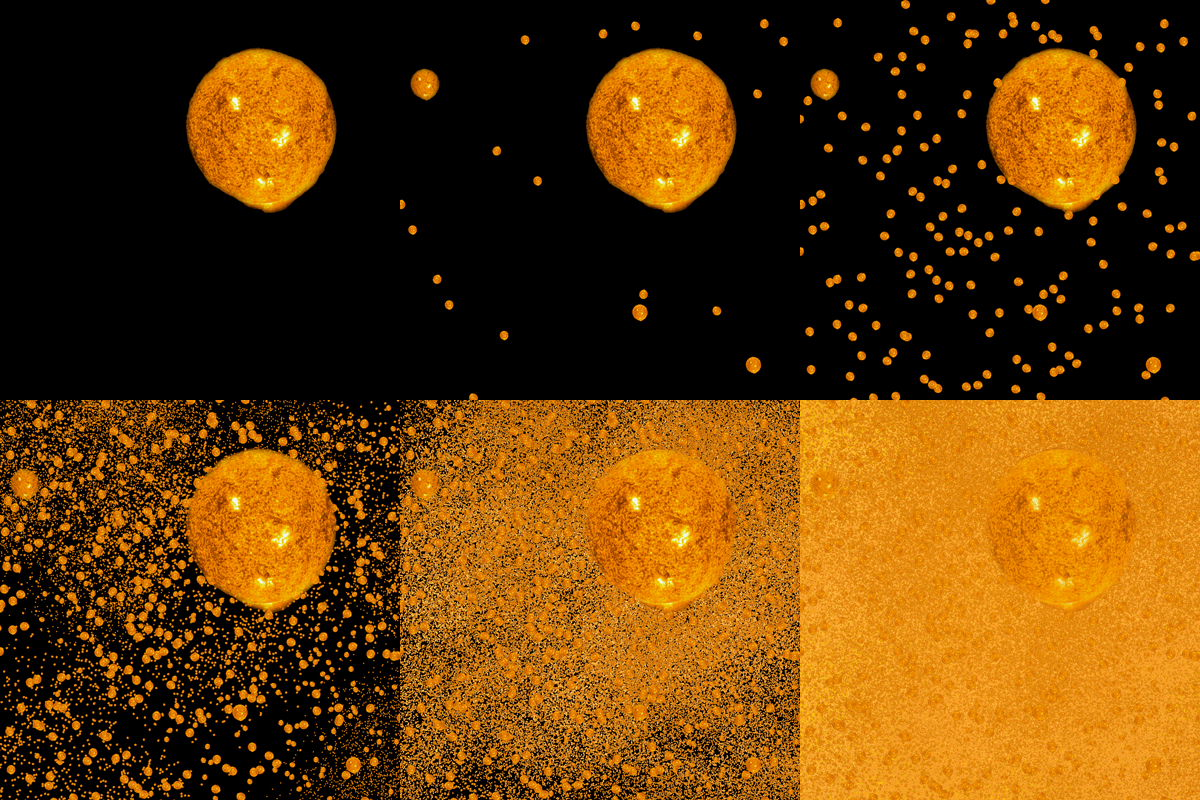
A scientist named Heinrich Olbers asked a tricky question: if there are billions of stars in every direction, why is the night sky not totally bright? The answer is that the universe is not infinite in age. Light from the most distant stars has not had time to reach us yet. Also, the universe is expanding, which stretches light from distant stars to wavelengths we cannot see.
Fun Facts
- In areas with no city lights, you can see about 2,500 stars with your bare eyes on a clear night.
- Light pollution from cities makes the night sky brighter, so fewer stars are visible.
- The darkest skies on Earth are found in remote deserts and high mountains far from any cities.
Did You Know?
About one-third of the world's population cannot see the Milky Way from where they live because of light pollution. Many people have never seen a truly dark night sky filled with thousands of stars!

You finished the article! Great job!