
Wikimedia Commons
Cosmic Rays
Cosmic Rays
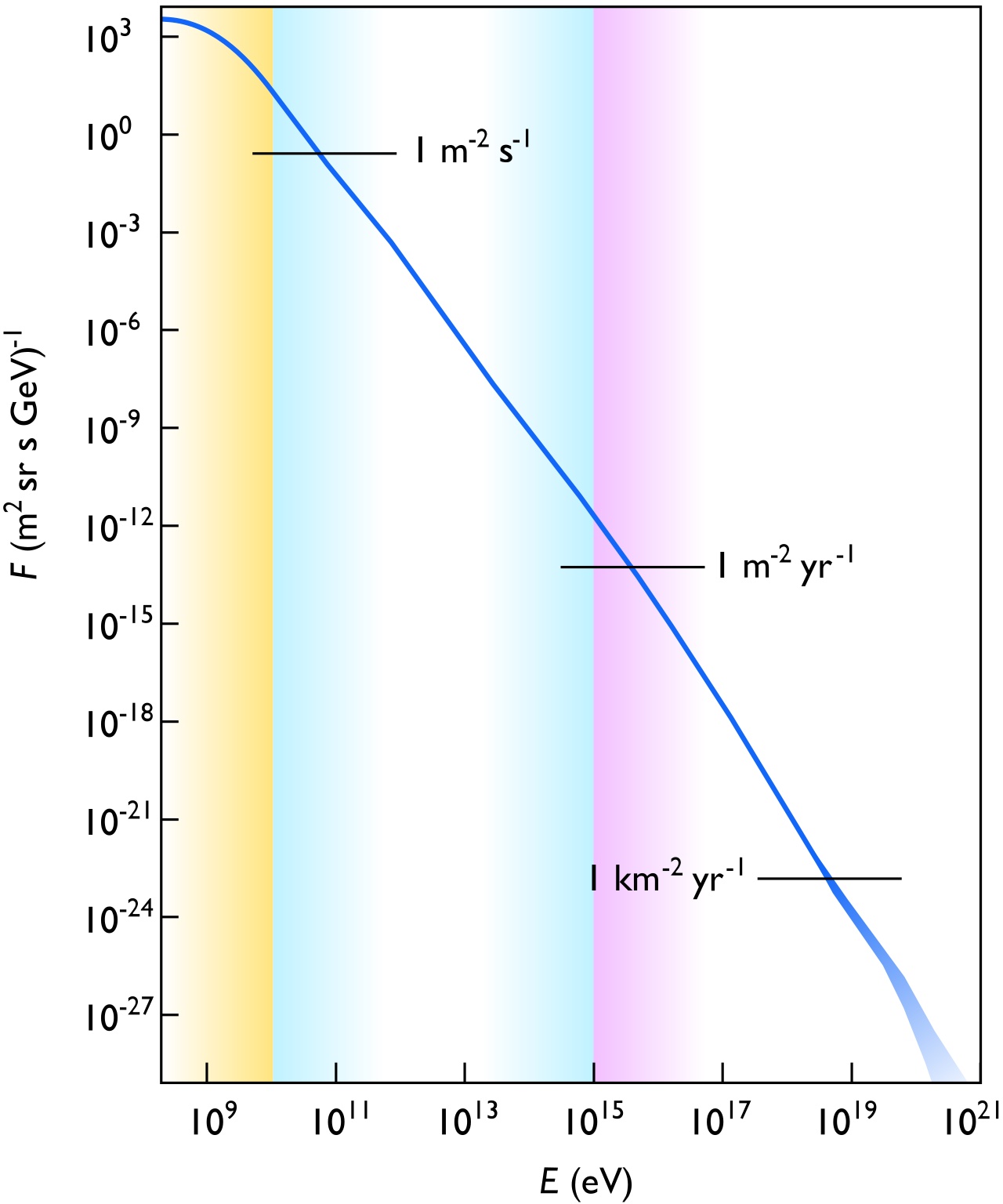
Cosmic rays are tiny pieces of atoms flying through space. They move at almost the speed of light. They come from the Sun, exploding stars, and places far across the universe. Cosmic rays hit Earth every second. Luckily, our atmosphere protects us from most of them.
Where They Come From
Some cosmic rays come from solar flares on the Sun. Others come from supernovas when giant stars explode. The most powerful ones come from far outside our galaxy. Scientists are still not sure where all of them come from. Big magnets in space can speed them up to huge energies.
Hitting Earth
When a cosmic ray hits our atmosphere, it breaks apart. This creates a shower of smaller particles that fall to the ground. Scientists study these showers to learn about cosmic rays. The Earth's magnetic field bends many cosmic rays away. Astronauts in space have to be careful because they get hit by more of them.
Fun Facts
- Cosmic rays were discovered in 1912 by a scientist flying in a balloon.
- The fastest cosmic rays have more energy than a fast baseball.
- Your body gets hit by cosmic rays all the time, but they are harmless.
Did You Know?
One cosmic ray called the 'Oh-My-God particle' was so fast that it had the energy of a baseball thrown hard, but in just one tiny particle.

You finished the article! Great job!