
Wikimedia Commons
Solar Sails
Solar Sails
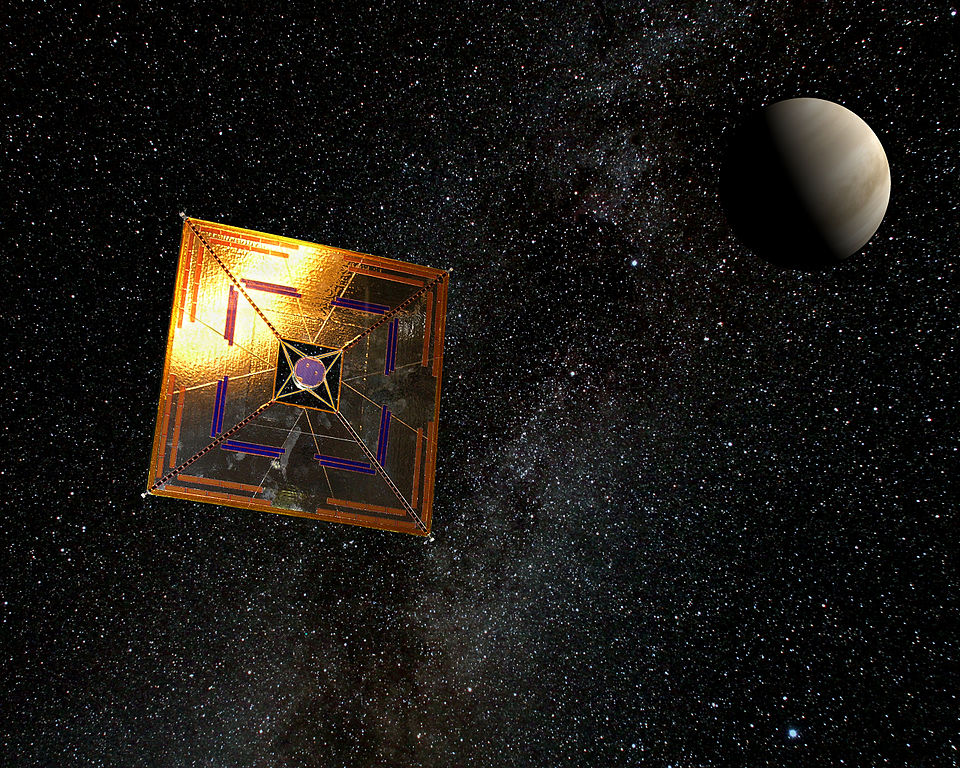
Did you know that light can push things? A solar sail is a giant, thin sheet that catches sunlight like a boat sail catches wind. The push from sunlight is very gentle, but in space there is no friction to slow things down. Over time, a solar sail spacecraft can reach very high speeds without using any fuel.
How Solar Sails Work
Sunlight is made of tiny particles called photons. When photons bounce off a shiny surface, they give it a tiny push. A solar sail has a very large, reflective surface to catch as many photons as possible. The push is small at first, but it never stops. Day after day, the spacecraft goes faster and faster. It is like rolling a ball downhill forever.
Solar Sails in Action
Japan launched a solar sail spacecraft called IKAROS in 2010. It was the first to successfully fly using sunlight. NASA's LightSail 2 launched in 2019 and used its solar sail to change its orbit. Scientists think solar sails could one day carry spacecraft to other stars because they do not need to carry heavy fuel.
Fun Facts
- A solar sail needs to be very thin, about 100 times thinner than a sheet of paper.
- Japan's IKAROS was the first spacecraft to fly using a solar sail in 2010.
- Solar sails could theoretically reach speeds of over 100,000 miles per hour if given enough time.
Did You Know?
The idea of using sunlight to push a sail through space was first suggested over 100 years ago by the same scientists who helped develop the theory of light.

You finished the article! Great job!