
Wikimedia Commons
Sunspots
Sunspots
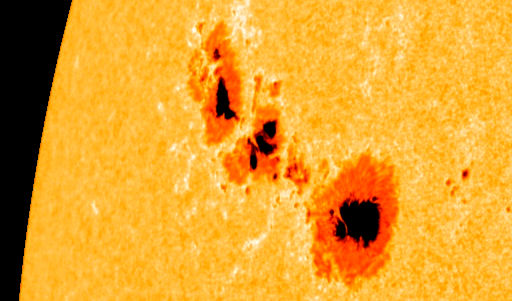
Sunspots are dark spots that show up on the Sun. They look dark because they are cooler than the area around them. Even so, sunspots are still very hot. Scientists study them to learn more about how the Sun works.
What Sunspots Are
Sunspots are patches on the Sun's surface where strong magnetic fields appear. These magnetic fields stop some of the Sun's heat from rising up. That makes the spots cooler and darker than the rest of the Sun. Some sunspots are bigger than the whole Earth. They can last for days or even weeks before fading away.
Why Sunspots Matter
Sunspots can cause big bursts of energy called solar flares. These flares can send out waves that reach Earth. Sometimes they cause the pretty lights in the sky called auroras. They can also mess up radios and satellites. The number of sunspots goes up and down about every 11 years.
Fun Facts
- Some sunspots are more than 30,000 miles wide.
- Sunspots were first seen through telescopes over 400 years ago.
- The Sun has more sunspots during a time called solar maximum.
Did You Know?
Never look straight at the Sun to find sunspots. You need a special solar filter to see them safely.

You finished the article! Great job!